Europe Is Betting on Technion Innovation: Two researchers awarded highly competitive ERC Starting Grants.
Every year, the European Research Council (ERC) identifies some of the world’s most promising early-career researchers and gives them the freedom to pursue bold ideas. This year, two of those ideas came from the Technion – Israel Institute of Technology.
From cancer research to artificial intelligence (AI), breakthroughs that shape the future often begin with fundamental questions that few researchers are equipped to answer. By supporting scientists willing to tackle those questions, the Technion is helping drive discoveries that strengthen Israel’s innovation ecosystem and generate knowledge with the potential to benefit people worldwide.
That’s the promise behind two new ERC Starting Grants awarded to Prof. Nir Hananya of the Schulich Faculty of Chemistry and Prof. Haggai Maron of the Andrew and Erna Viterbi Faculty of Electrical and Computer Engineering.
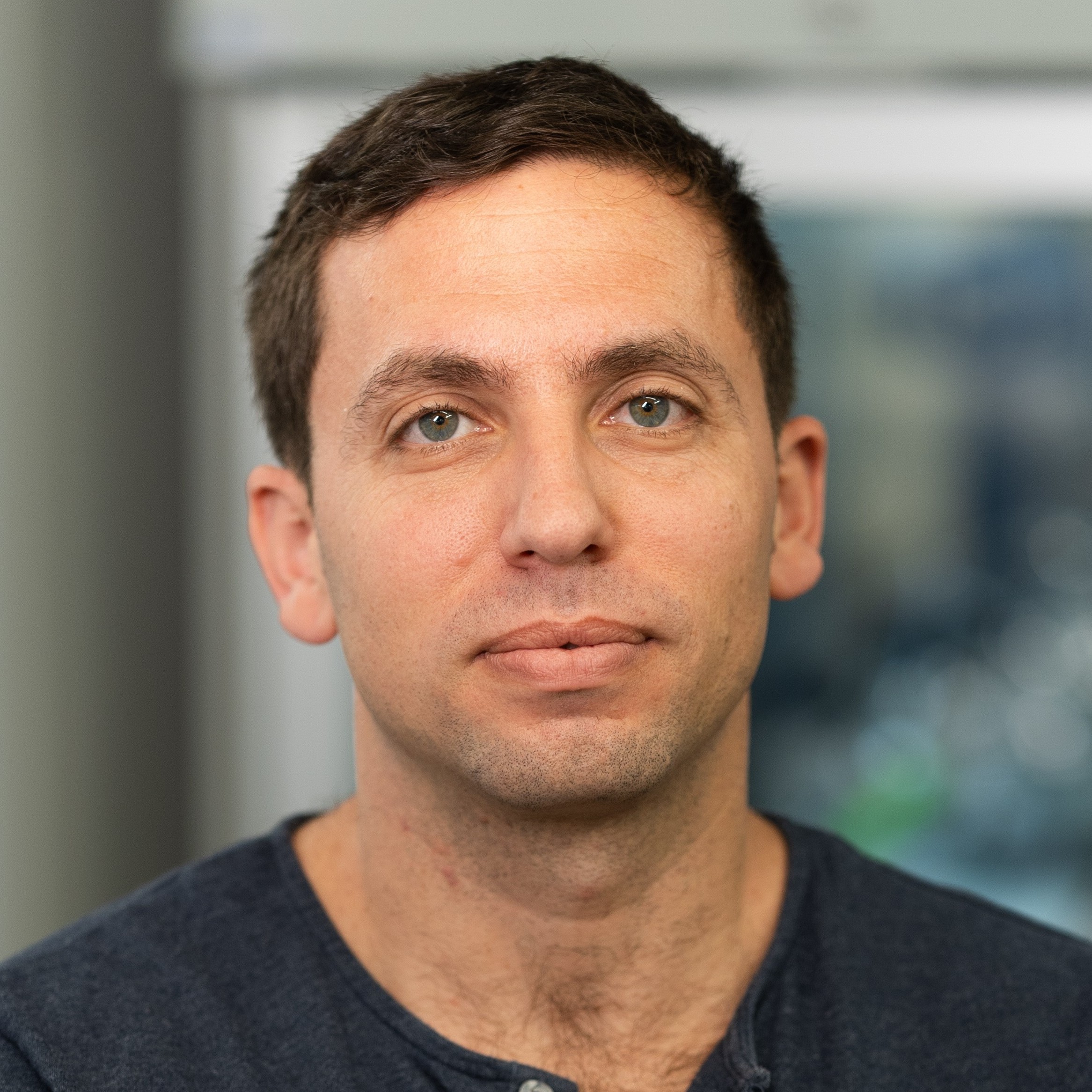
Prof. Nir Hananya. Photo: Nitzan Zohar
At first glance, Hananya’s and Maron’s work could not be more different. One studies how cells know which genetic instructions to follow, while the other investigates how AI models learn, adapt, and make decisions. Yet despite working in vastly different fields, both are pursuing a remarkably similar goal: uncovering the underlying mechanisms that govern how complex networks behave. In both cases, much of what happens behind the scenes remains a mystery — and the ERC Starting Grants will help them uncover it.
The Instructions Hidden Inside Every Cell
Every cell in the human body contains essentially the same DNA. Yet a brain cell behaves very differently from a muscle cell or a liver cell. How? Scientists know that DNA doesn’t act alone. Inside the cell, DNA is wrapped around proteins in a compact structure called chromatin. Tiny chemical markers attached to these proteins help determine which genes are switched on and which remain silent.
Researchers have long known that these molecular “tags” help control everything from development to disease. What they still don’t fully understand is exactly how the process works.
Hananya aims to change that. His laboratory will engineer what he calls “designer chromatin” carrying precisely defined chemical modifications. By building chromatin with carefully selected molecular tags, Hananya can isolate their effects and determine how they influence a cell’s genetic instructions.
It’s similar to giving researchers a controlled starting point, allowing them to see exactly how specific changes affect which genes a cell turns on or off.
Hananya hopes to uncover some of the fundamental rules that govern how cells maintain their identity and preserve those instructions from one generation of cells to the next.
The findings could also shed light on diseases such as cancer, where normal gene regulation often breaks down.
Looking Inside AI’s “Weight Training”
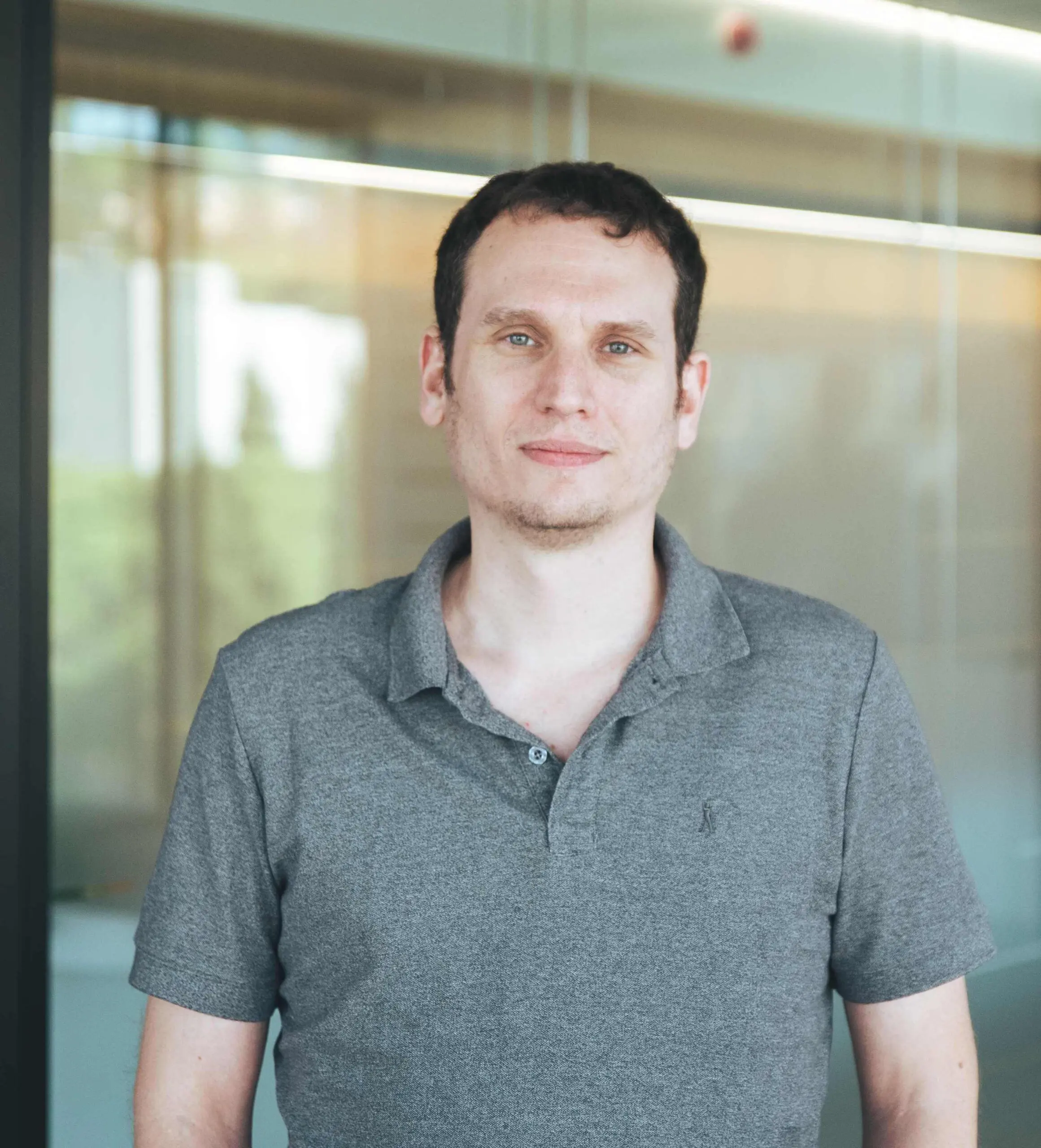
Prof. Haggai Maron. Photo: Inbal Ginat
If Hananya is studying how cells manage information, Maron is exploring how AI does the same.
Today’s AI systems are powered by neural networks, complex mathematical models trained on enormous amounts of data. Most AI research focuses on what goes into these systems and what comes out. Maron is interested in what happens in between.
His research focuses on an emerging field known as weight-space learning, which treats trained AI models themselves as objects that can be studied, analyzed, and improved. Every neural network contains millions, and often billions, of internal settings known as weights. These weights capture what the system has learned during training and determine how it performs tasks. Maron wants to understand what AI models have learned, how they make decisions, and how they can be improved.
His team will develop new methods for analyzing existing AI models, understanding what they have learned, adapting them to new purposes, improving their performance, and even generating entirely new models.
It’s the difference between driving a car and understanding how the engine works. Most people judge a car by how it performs on the road. Maron wants to understand the engine itself, how it works, what makes it effective, and how better versions can be built.
The work could ultimately lead to AI systems that are easier to improve, easier to customize, and easier to understand.
The Technion: A Place Where Big Questions Thrive
Elite research awards like ERC Starting Grants are designed to identify promising researchers early and give them the freedom to pursue bold, unconventional ideas.
For the Technion, Hananya’s and Maron’s awards reflect more than individual achievement. They underscore the university’s ability to attract and support young faculty members tackling some of the most fundamental questions in science and engineering.
Both researchers are pursuing discoveries that could influence future advances in medicine, biotechnology, and AI.
By empowering researchers to pursue high-risk, high-reward ideas, the Technion continues to cultivate the talent, knowledge, and discoveries that drive economic growth, improve lives, and address global challenges. As questions about cancer, human health, and AI become increasingly important, researchers like Hananya and Maron are expanding the boundaries of knowledge and helping shape the future.
Their work also strengthens Israel’s position as a global center of scientific and technological innovation, advancing discoveries that have the potential to benefit people far beyond the laboratory.
More High-Tech Future stories
Beyond the Breakthrough: Inside the Technion Labs Shaping Tomorrow’s Technologies