Why the Perfect Pitch is Your Biggest Mistake
September 23, 2026

























The Technion’s story has been intertwined with Israel’s for more than a century, from laying the foundations for a new nation to shaping its future.

Step inside Israeli innovation at the David and Janet Polak Visitors Center. Experience our 360° immersive movie and tech exhibition. Open to individuals and groups.
Learn MoreResearchers in the Center for High-Speed Flight are advancing hypersonics research to help defend Israel against next-generation airborne threats.

Imagine: After a business lunch in Tel Aviv, you’re back in New York City in time for dinner. Your teen aces her afternoon math exam in Boston before kicking her way to victory at a twilight soccer match in Los Angeles. Academic researchers are discovering new minerals on their weekly expeditions to the moon. You’re looking forward to a well-deserved summer vacation beneath the soaring mountains of Mars.
Possibilities like these may be science fiction today, but tomorrow they could become reality thanks to high-speed (or hypersonic) flight, enabled by technologies that Technion minds are working diligently to develop — not only to expand humanity’s access to distant locales, but also to preserve Israeli lives.
Indeed, the same technologies that will enable rapid transport across the globe and into space will also prepare Israel to defend itself against a new generation of airborne threats: missiles that can travel faster than a bullet and evade even the most cutting-edge defense systems.
Fielding an aircraft at hypersonic speeds — greater than Mach 5, or five times the speed of sound — is an extraordinary feat.
“When vehicles travel at hypersonic speeds, conventional aerodynamics, physics, and engineering go out the window,” said Brigadier General (ret.) Amnon Harari, director of the Center for High-Speed Flight at the Technion. “The time-tested mathematical equations that dictate forces like lift and thrust no longer apply.”
The conditions of hypersonic flight are extreme, to say the least. Shock waves form around the vehicle, the surrounding air becomes turbulent and chaotic, and the vehicle’s ability to position itself and maneuver is affected. The friction between the vehicle and the air generates pressure that could crush conventional aircraft and heat that rivals the surface of the sun. The chemical composition of the air changes, transforming the molecules into their atomic components, and then energizing them into ions — substances that attack surfaces and confound engines. Indeed, both the composition of the air and the speed at which it travels present significant challenges related to engine design.
“At hypersonic speeds, igniting an engine is like lighting a match in a hurricane,” said Joe Lefkowitz, associate professor in the Stephen B. Klein Faculty of Aerospace Engineering and co-founder of the Center for High-Speed Flight. In short, hypersonics necessitate a revolution in every aspect of aircraft design: a completely different propulsion system, aerodynamic design, materials, structure, controls, and fuels.
Global interest in high-speed flight dates back to the 1930s, when the question of fielding a vehicle at very high speeds was merely a thought experiment.
Theory gave way to practice in the 1960s, as the United States and Soviet Union raced to space — or, more precisely, made the journey back to Earth. The hypersonic regime does not take effect in space, given the absence of air, but rather kicks in once the vehicle approaches Earth, accelerates due to gravity, and makes contact with air.Today, the world’s interest in hypersonics is driven by military imperatives, as the U.S., China, Russia, Iran, and other nations race to develop these technologies to outgun their adversaries.
Every world superpower has hypersonic technology in development,”“Most pertinent to Israel, our regional foes, including Iran and Iran-backed Houthi rebels in Yemen, are developing hypersonic missiles.”
Brigadier General (ret.) Amnon Harari, director of the Center for High-Speed Flight
Such missiles are particularly deadly because they have the ability to maneuver, to curve and swerve, thereby evading traditional defense systems. They also have a greater ability than traditional missiles to strike without warning, because they can travel lower in the atmosphere, flying under the radar.

When Houthis attacked Ben-Gurion International Airport on May 4, 2025, they used a ballistic missile that some believe had hypersonic capabilities. The Houthis have claimed the missile has stealth technology, a range of 1,335 miles, high maneuverability, and the ability to travel up to speeds of Mach 16. While these claims have not been validated, we do know the missile defied Israel’s efforts to intercept it using its long-range Arrow Antimissile System and the U.S.-made Terminal High-Altitude Area Defense (THAAD) antimissile system. The strike damaged airport infrastructure, injured Israeli citizens, and temporarily grounded flights to and from the airport.
Iran, like the Houthis, has boasted of having hypersonic capabilities. Though the missiles Iran deployed against Israel in June 2025 lacked the maneuverability of true hypersonic missiles, the nation’s bluster indicates its hypersonic ambitions.
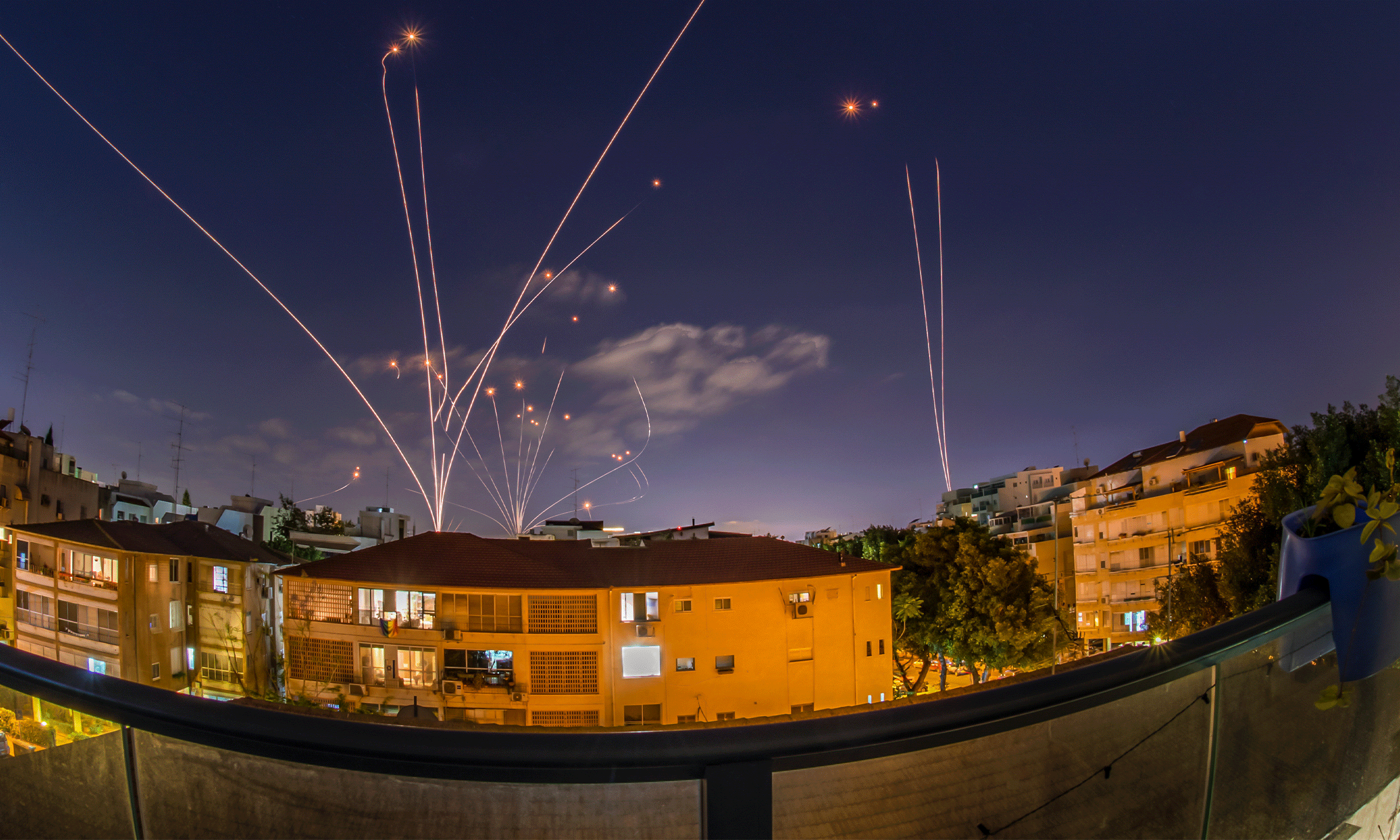
Israel had anticipated such a threat long before 2025. While David’s Sling, Iron Dome, and the Arrow Antimissile System have saved millions of Israeli lives, new defensive technology is needed to counter the hypersonic threats of today and tomorrow.
The Technion began exploring the possibility of a comprehensive program in hypersonic research as early as 2018, when Prof. Lefkowitz and Prof. Dan Michaels in the aerospace engineering faculty began drumming up interest among their colleagues. Their vision was to create a new center that would serve as a national hub for hypersonic research.
Technion leadership — and the University’s founding partner, Israel’s Directorate of Defense Research and Development — appreciated the relevance of hypersonic capabilities to Israel’s security. If Israel were to successfully defend itself against hypersonic missiles, it would need to understand how they operated.
Today, with the only faculty of aerospace engineering in Israel, the Technion is the national nexus for fundamental research on hypersonics in Israel. Launched in 2023, the Center for High-Speed Flight is breaking new ground in the field.


The Center’s research aims to answer perplexing questions related to hypersonic flight: What kinds of materials can withstand the heat, pressure, and chemical reactions related to high-speed flight? How do you build an engine that can ignite and sustain a flame in air traveling so fast, air that is no longer composed of oxygen? How do you create fuels that not only provide energy, but also double as a coolant? What is the precise balance of lift and thrust needed to field a vehicle when the traditional laws of aerodynamics no longer apply?Answering these questions will require extensive research infrastructure. Aircraft are designed using very large wind tunnels that simulate the conditions of flight. While the Technion already boasts one impressive tunnel that is designed to test materials and can heat air to temperatures of more than 9,000 degrees Fahrenheit, additional infrastructure is needed to test engines and fuels.

Answering these questions will require extensive research infrastructure. Aircraft are designed using very large wind tunnels that simulate the conditions of flight. While the Technion already boasts one impressive tunnel that is designed to test materials and can heat air to temperatures of more than 9,000 degrees Fahrenheit, additional infrastructure is needed to test engines and fuels.
“Hypersonic conditions are so extreme that a single wind tunnel will not suffice,” explained Harari. “You need multiple tunnels to conduct this research, and that’s exactly what we’re building in the Center.”
Hypersonics research also requires expertise from multiple academic disciplines, including materials science and engineering, mechanical engineering, chemical engineering, and physics. By bringing together researchers from these diverse fields — both Technion faculty and visiting professors — the Center will facilitate this kind of collaboration.
“Our hope is that the Center for High-Speed Flight will serve as a hub for world-class, interdisciplinary collaboration on hypersonics,” said Prof. Michaels.
To advance this research, the Technion has assembled a diverse coalition of external collaborators, with funding for the Center coming from the Ministry of Defense, Israeli industry, and donors from the American Technion Society and around the world.
“What we’ve done in the Center is amazing,” said Harari. “Israeli defense companies that compete with one another on a daily basis for market share are sitting together around the same table.” They are also collaborating with branches of the U.S. military — particularly the Air Force Research Laboratory and the Naval Research Laboratory.
Harari continued, “Ultimately, our hope is that fundamental research born in Technion labs will provide our Israeli industry and military partners with the insights needed to create a protective shield around Israel — while also benefiting our greatest ally, the United States.”
Though the defense applications of hypersonic technology are the most immediately relevant to Israel, the science might eventually lead to civilian applications, too. Perhaps most exciting is the potential for expanded access to space.
“Within the realm of hypersonic research, the civilian dream is space access,” said Prof. Lefkowitz.
As numerous disasters have reminded us, flying to space using a conventional rocket is risky. Rockets carry massive oxidizer tanks that can result in deadly explosions. Hypersonic engines — which are known as scramjet engines and can accelerate a vehicle up to 10,000 feet per second — rely on air flowing into the vehicle, which significantly reduces the oxygen required on board. This can make hypersonic travel to space both safer and cheaper and creates the possibility of making space travel a routine occurrence.
“Today, space travel is reserved for a handful of highly trained astronauts each year,” said Prof. Lefkowitz. “Imagine, though, if traveling to space were as easy as purchasing a ticket and packing your bags.”
Prof. Michaels points to the potential for interplanetary travel as an exciting extension of expanded space access. Just as rockets must withstand hypersonic conditions upon reentering Earth’s atmosphere, the same is true for entry to other planets’ atmospheres. Though fielding manned hypersonic vehicles presents a unique set of challenges — given the need to protect passengers from the intense heat and sound and to compensate for additional size and weight — such vehicles could expand the frontiers of scientific research.
“The potential of hypersonic technology to advance planetary research is quite promising,” said Prof. Michaels.
From its roots in defense, hypersonic research has the potential to grow exponentially in decades to come, leading to new technologies that will benefit human travel in our solar system.”
Prof. Dan Michaels
On the slopes of Mount Carmel, the Technion’s brightest minds are working hard to crack the code on hypersonics. For Israel, this research is not a luxury, but a vital security need.
Yet the same research that will help create a protective shield around Israel may one day afford humanity the luxuries we can only dream of — whether it’s traversing the Earth in hours or catching a flight to a nearby planet, making the globe smaller while also expanding our world. Though such capabilities may still seem distant, Technion research is drawing us closer to these extraordinary possibilities.