Something Fresh in the State of Denmark
October 06, 2026






























The Technion’s story has been intertwined with Israel’s for more than a century, from laying the foundations for a new nation to shaping its future.

Step inside Israeli innovation at the David and Janet Polak Visitors Center. Experience our 360° immersive movie and tech exhibition. Open to individuals and groups.
Learn More
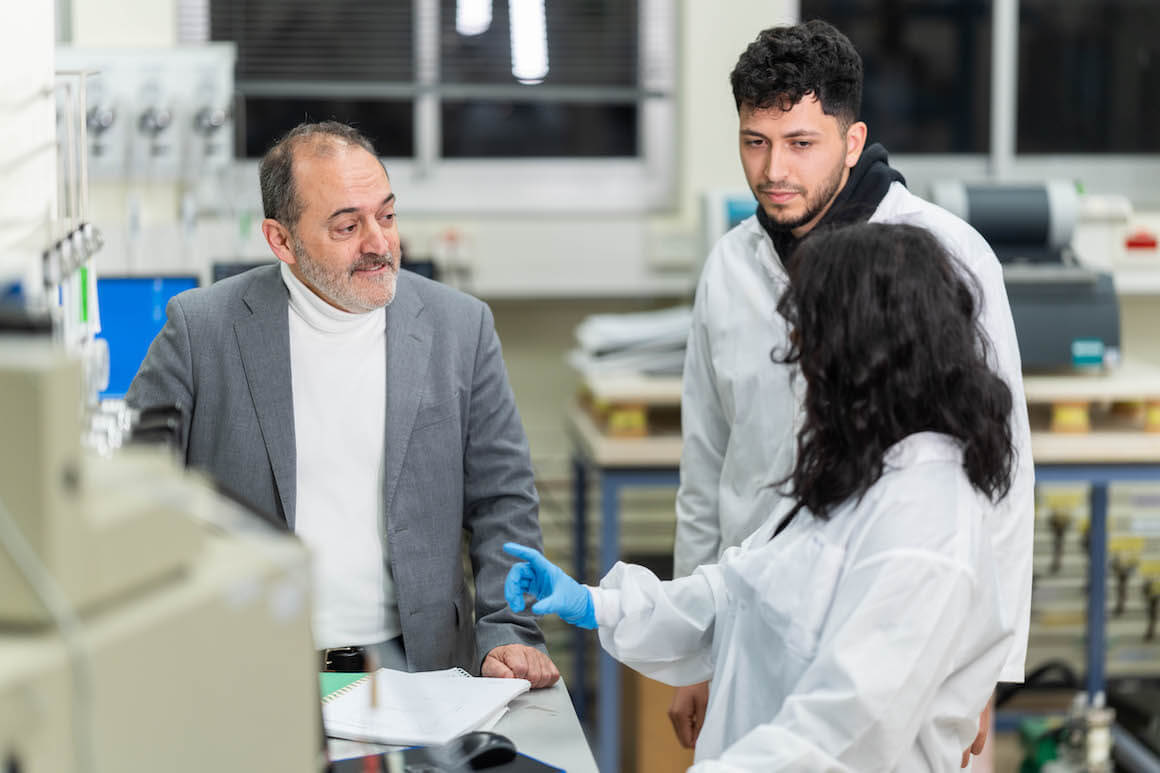
“If you have energy, you have everything — food, water, heating, defense,” said Professor Dario Dekel, director of the Nancy and Stephen Grand Technion Energy Program (GTEP) at the Technion. “Energy is critical for the future.” The GTEP has already made impressive breakthroughs in alternative and sustainable technologies, including fuel cells and batteries, green hydrogen and electrolyzers, water energy, renewable energies, and more. But the war with Hamas has made Israel’s need for energy security more crucial, even with the discovery of natural gas in the Mediterranean. “Given the political situation in Israel, you cannot depend on getting energy from…
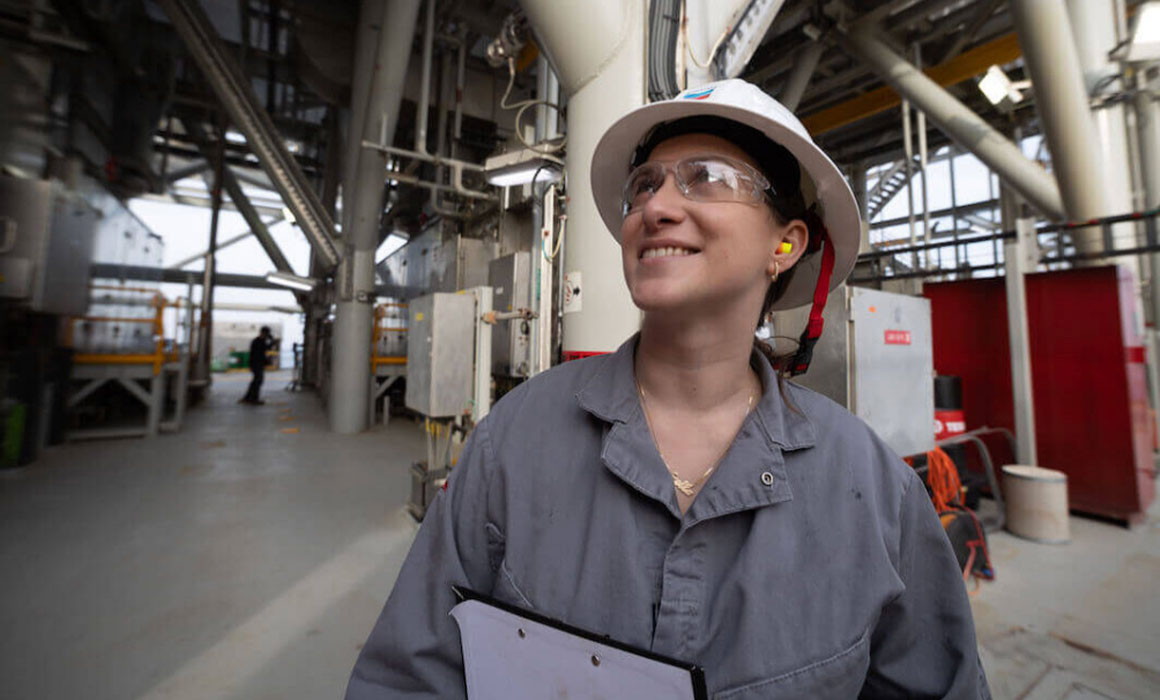
Rafaella Waissertreiger admits with a chuckle she is losing touch with what’s fashionable these days. Each morning, she dons gray, flame-resistant pants and a work shirt, steel-tipped boots, safety goggles, earmuffs, and hard hat, before heading upstairs to work on the Tamar gas platform in the Mediterranean Sea, approximately 15 miles from Ashkelon. Graduating from the Technion in 2020, chemical engineering degree in hand, she is one of Israel’s new breed of workers — a natural gas engineer. “It’s an honor to help reduce the air pollution in Israel, and to be part of the nation’s efforts to become…

An Israeli startup is on a mission to bring the benefit of natural sunlight indoors into our homes, workplaces and even hospitals. Solight addresses the issue of lack of sunlight in indoor spaces by creating a solar lighting system that takes the natural light of the morning and afternoon hours and channels it into desired spaces, providing health benefits to those stuck inside and cutting exposure to artificial light. The company was founded in 2012 by brothers Ofer and Dror Becker, who recognized the energy-saving advantages of sunlight but also realized that its health benefits shine brightest. Solight Founder and…

An award of $1.3 million has been split between seven Israeli climate tech startups as part of the startup category of the Climate Solution Prize, an initiative created to encourage innovation in this field. The selection for the track was carried out by Startup Nation Central, a Tel Aviv-based nonprofit dedicated to promoting Israeli innovation, and the Climate Solutions Prize Organization. The winners include: Filo System, whose data compression engine provides storage and networking saving, which lowers energy consumption and cooling cost for data centers; TIGI Solar CEO Zvika Klier is a Technion alumnus.

Going from development on Israel’s world famous Iron Dome missile defense system to maximizing energy usage might sound a little odd, but to Ron Halpern, chief commercial officer at mPrest, the software company behind the platform, the transition was a natural one. “Iron Dome essentially is a real-time distributed asset optimization system; the assets happened to be interceptors,” Halpern tells NoCamels. mPrest CEO and Founder Natan Barak and CTO Noam Arbel are Technion alumni. Iron Dome was developed in large part by Technion alumni working at Rafael Advanced Defense Systems.

Scientists throughout the world are seeking ways to develop greener power sources. Both solar and wind energy solutions are great alternatives to fossil fuels when conditions are sunny or windy, but figuring out how to store energy for use when the weather doesn’t comply is the big challenge. Hydrogen fuel cells have great potential for energy storage and conversion, but they remain highly expensive to operate. Now thanks to a collaboration between scientists at the Technion and Stanford University, a major obstacle has been overcome. “This solution has great benefits for the research of fuel cells in academia as well…

To wean itself off fossil fuels, the world needs cheaper ways to produce green hydrogen—a clean-burning fuel made by using renewable electricity to split water into hydrogen and oxygen. Now, researchers report a way to avoid the need for a costly membrane at the heart of the water-splitting devices, and to instead produce hydrogen and oxygen in completely separate chambers. As a lab-based proof of concept, the new setup—reported this month in Nature Materials—is a long way from working at an industrial scale. But if successful, it could help heavy industries such as steelmaking and fertilizer production reduce their dependence on oil,…

Classic denim blue jeans have been a staple in the global fashion industry for over half a century – but their iconic color comes with a heavy environmental price. Dyeing just a single pair of jeans involves thousands of liters of water. And the dye itself comes from synthetic indigo, which is made of a slew of toxic chemicals, including hydrosulfites, that are all later released into the environment via waterways. Israeli startup Sonovia has created a way to give blue jeans their quintessential color that both uses a non-toxic dye that is better for the environment and cuts water use by…

An Israeli automotive startup was busy completing its first major contract with car giant Volvo when its team was caught up in the October 7 attack by the Hamas terror group, which killed 1,200 people in southern Israel. Carrar has developed a new way of automatically cooling electric vehicle (EV) batteries, by more effectively dissipating the heat generated when being used or charged, or just idling in a hot parking lot. This prevents damage to the batteries that in some extreme circumstances could even cause the car to catch fire. The Carrar facility is based near the city of Sderot, where…

In a bid to unlock the full potential of hydrogen fuel cells as a cleaner alternative to conventional energy sources, researchers from the Department of Energy’s SLAC National Accelerator Laboratory, Stanford University, and the Toyota Research Institute (TRI) have made significant strides in reducing the cost of fuel cell technology. The breakthrough involves a radical shift in the catalyst composition, traditionally reliant on expensive platinum group metals (PGM), according to an SLAC release. Hydrogen fuel cells have long been recognized for their promise in energy storage and conversion, but the prohibitive cost of PGMs in the catalyst has hindered widespread adoption. Michaela Burke…

“When you look at electricity production, you realize renewable energy has already arrived,” Yonadav Buber tells ISRAEL21c. “The cost of renewable energy production is already competing with that of coal and natural gas. The only reason we haven’t yet become dependent on renewable energy is that it works whenever it wants – you can’t turn on the sun at night or make the wind blow.” There are lots of companies examining ways to store renewable energy to make it more available. “But I always think that the simplest solution is also the best one,” Buber says.
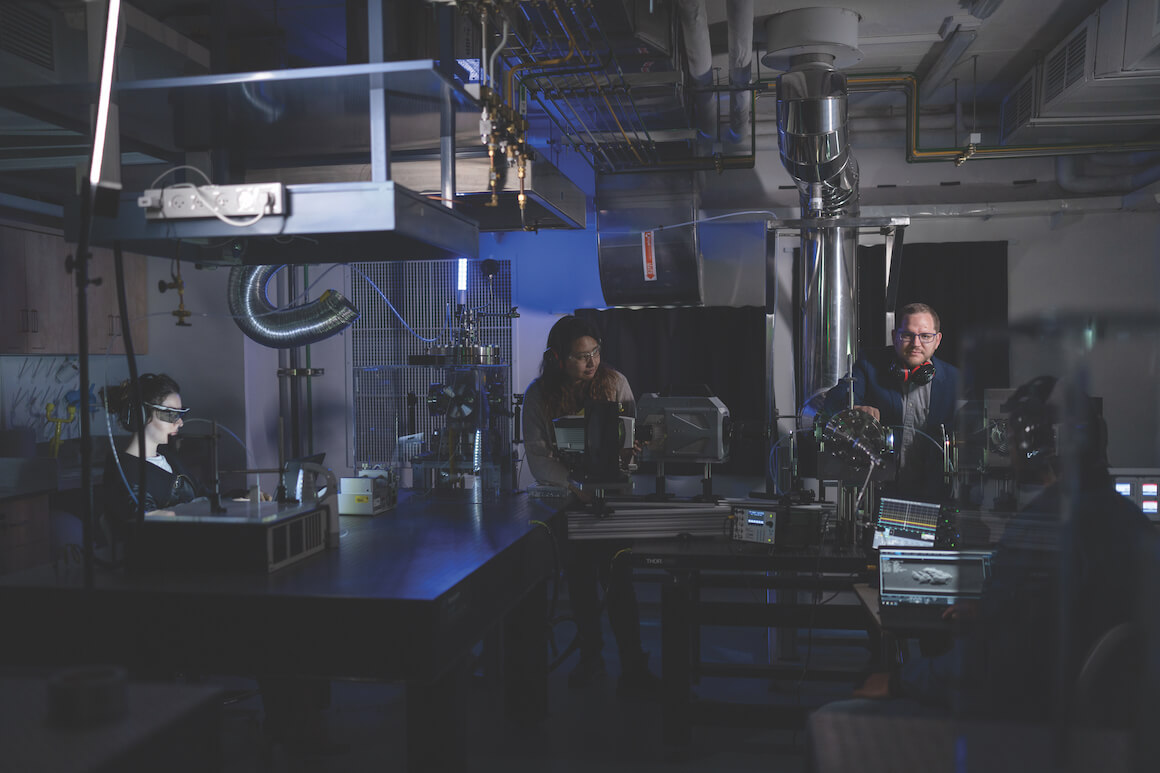
A decade from now, travelers could be flying in a jet that emits no carbon into the atmosphere. The fuel powering that aircraft may have its origins in the Technion’s Faculty of Aerospace Engineering. Technion researchers are working on a variety of projects to develop alternative jet fuels derived from ammonia and hydrogen. While considerable barriers remain, both substances — when produced cleanly with renewable power — have the potential to run jet engines as well as gas turbines to generate carbon-free electricity. “If you want to live in a world where we reduce the carbon dioxide in the air…