Something Fresh in the State of Denmark
October 06, 2026























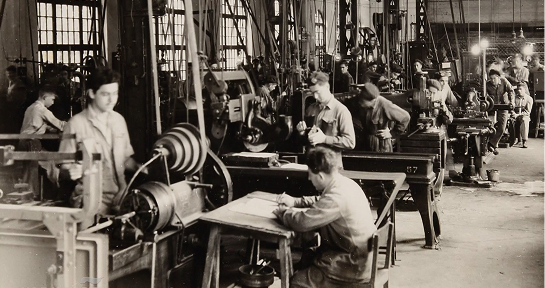
The Technion’s story has been intertwined with Israel’s for more than a century, from laying the foundations for a new nation to shaping its future.

Step inside Israeli innovation at the David and Janet Polak Visitors Center. Experience our 360° immersive movie and tech exhibition. Open to individuals and groups.
Learn More

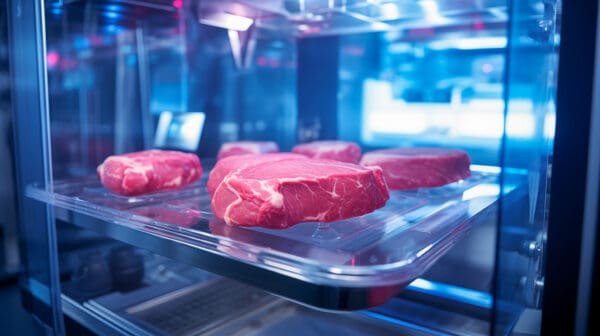
There’s a reason most of us love biting into a slice of rich chocolate cake, or sinking our teeth into a mouthwatering, juicy burger. The high fat content in these foods intensifies their flavors and aromas, and gives them a tender and moist texture. And now an Israeli startup has developed a way to add more of this nutrient into plant-based alternatives to meat, whose fat more often than not leaks out as it is being cooked. “If you’ve ever tried [a plant-based meat alternative] and you were left with a dry, chewy sensation, or maybe the flavors and aroma…

Colony collapse disorder, a phenomenon where bees die for mysterious reasons, caused alarm in recent decades and spurred a flurry of “save the bees” campaigns — because honeybees are needed to pollinate the plants that provide our food. But the bigger problem, according to Emily Speiser, VP of marketing for BloomX, is that honeybees, which have become the default bee for pollination in commercial agriculture because they’re easier to transport and manage — is that they aren’t as efficient as wild bees in pollinating specific fruits and vegetables like blueberries and avocados. In addition, says Speiser, there aren’t enough honeybees as…

While there are countless scientific breakthroughs that could help fight the world’s bourgeoning climate woes, “the problem lies in bringing together the science and technology people and the entrepreneurs” to make these innovations effective, said Noam Sonnenberg, director of the Israel Innovation Institute’s PLANETech community. In the interest of tackling this important, high impact challenge the Technion and the PLANETech community recently began a unique collaboration that will bring together researchers from different academic departments with entrepreneurs and investors interested in ClimaTech. The two groups recently conducted the first of a series of meetings that will explore research in foodtech,…

Israeli company QD-SOL has quite a few things going for it. Not only is it working to produce completely green hydrogen – the renewable energy’s sector game-changing card and biggest buzzword – but it is also backed by none other than Hollywood star and sustainability entrepreneur Ashton Kutcher. “Almost the entire hydrogen production industry is a polluting industry. After it’s produced, hydrogen is an excellent, green energy provider, but it’s usually made by burning gasses that also release a lot of carbon dioxide together with the desired hydrogen,” QD-SOL CEO Gil Davidman tells ISRAEL21c. “The world’s already decided to take steps toward net zero…

Prof. Gideon Grader from Israel’s Technion-Israel Institute of Technology was recently awarded the Grand Prix Scientifique research grant by the Institut de France for developing innovative green hydrogen technology. The Institut de France, a nonprofit organization founded in 1795 that unites five French academies, encourages research, supports creativity, and funds many humanitarian projects. Grader has developed a process — dubbed E-TAC — along with his Technion colleagues, which splits water into hydrogen and oxygen by decoupling the production of the two gasses. This is achieved by circulating electrolyte solutions at different temperatures through the electrodes.

Turning fresh air into water seemed like nothing short of a miracle back in 2012. That was when Israeli startup Watergen revealed its first atmospheric water generator to the world. Watergen cools air, much like an air conditioner, until it condenses and becomes water. But technology moves on apace. And H2oll another Israeli startup, says it can also produce drinking water from the atmosphere – but more cheaply, more efficiently and more sustainably. And in any climate. H2OLL Founder and CTO Ilan Katz is a Technion alumnus.

There was a time, not so long ago, when worried Israelis would listen out for daily updates on the water level of the Sea of Galilee (or the Kinneret, as it is known in Hebrew). It’s the country’s only significant freshwater lake and was, until recently, its primary source of water. So it was a national concern if the level dropped, as it often did during the summer months, day-by-day, centimeter-by-centimeter. The upper red line (danger), was bad news. The lower red line (pumping from the lake prohibited) was worse, and the black line (risk of permanent damage) was terrible….
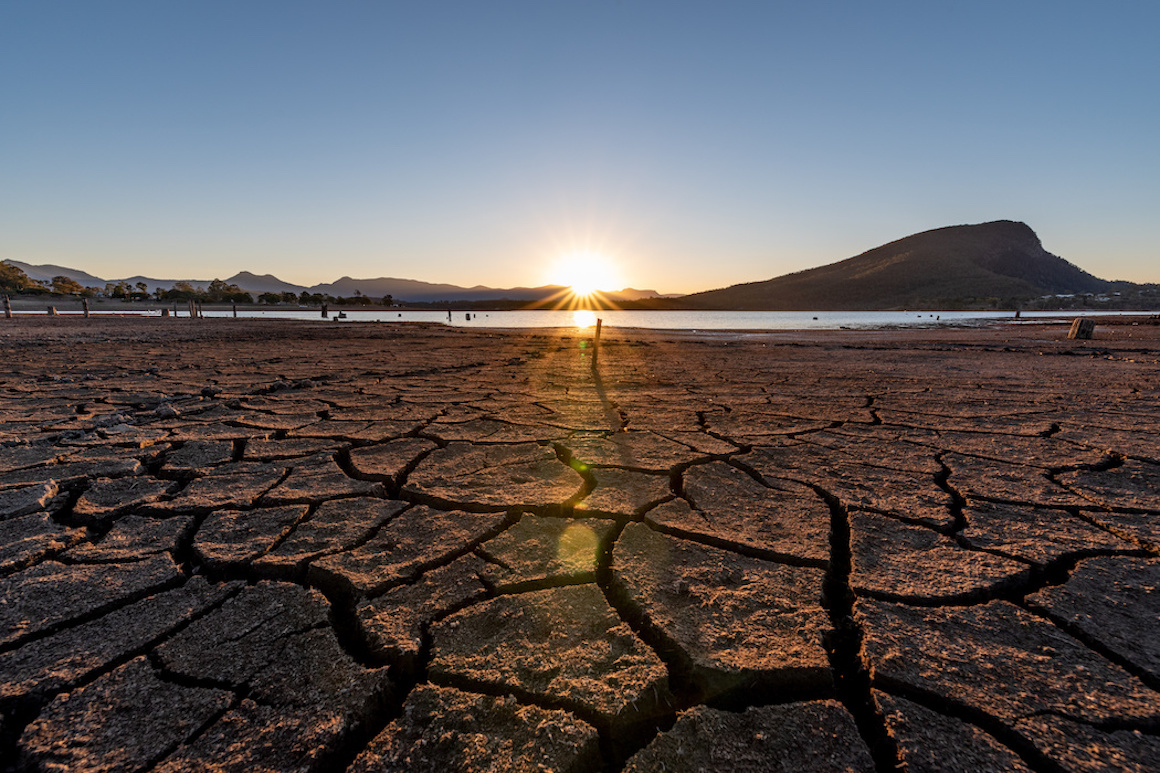
Since it was founded nearly 100 years ago, the Technion’s world-class scientists have immersed themselves in developing innovative technologies that have not only been crucial for Israel’s economy, society and security, but have also impacted humanity on a global scale. Well before António Guterres, the U.N.’s Secretary General, stated last month that, “the climate time-bomb is ticking,” Technion researchers were prioritizing projects that could help reverse our planet’s grim prognosis, mainly by reducing the consumption of natural resources and restoring balance to the Earth’s carbon cycle. In a nutshell: by focusing on solutions that promote sustainability. At the Technion, a…

Titanium-air batteries have been recently tested by a team of scientists from Technion – Israel Institute of Technology and Forschungszentrum Jülich, and the results are promising. These batteries have the potential to store up to three times more energy than standard batteries, making them a great candidate to replace current zinc-air batteries used in small devices such as hearing aids and other sensors. The breakthrough in utilizing an ionic liquid to enhance the battery’s efficiency and longevity means that these batteries could be a significant upgrade to the zinc-air batteries currently used in hearing aids. These batteries have a limited lifespan and can…

For hundreds of years, Passover Seder meals have looked remarkably similar in households across the world. Alongside the matzah are symbolic foods including a flame-broiled egg, bitter lettuce and roasted shank bone as well as raw veggies and a cinnamon-scented fruity dip. A typical Seder dinner menu begins with chicken-and-matzah-ball soup and a fish appetizer followed by poultry, lamb or beef and topped off by a cake made with multiple eggs for leavening. Today, this picture is starting to look out of sync with animal-free dietary trends. Flexitarians are the primary drivers of this shift, as well as vegans, vegetarians…

What if we could use water in solar water heaters to supply electricity during power outages? That was the winning idea in a recent hackathon that challenged brilliant Technion students to develop solutions to cope with extreme heat waves in urban areas. It’s something that is critically important, since Israel is warming at twice the rate of the rest of the world and heat-related deaths are also on the rise. The competition launched two weeks prior to the hackathon event with a lecture by Naama Shapira of the Technion’s Samuel Neaman Institute that was focused on mapping challenges in the…
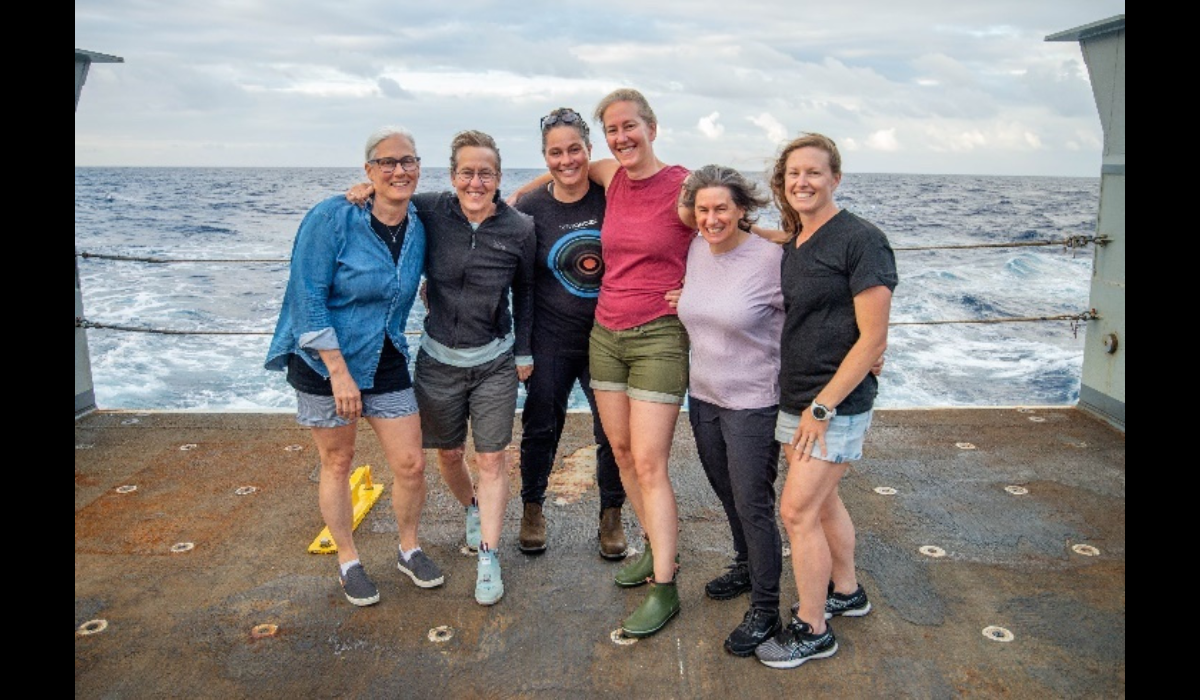
The group from the Technion (L-R): Dr. Laure Arsenieff, postdoctoral fellow (from France); Camelia Shopen-Gochev, Israeli doctoral student; Prof. Debbie Lindell; Dr. Sigitas Šulčius, research fellow/academic visitor (from Lithuania). A team of primarily women, including a group from the Technion led by Professor Debbie Lindell of the Faculty of Biology, embarked on a research trip in the Pacific Ocean from January 22 to February 18. Their objective was to study the biological mechanisms that dictate the structures of diverse biological populations at different latitudes and under various environmental conditions. The Technion team focused primarily on the role of viruses in…