Something Fresh in the State of Denmark
October 06, 2026
















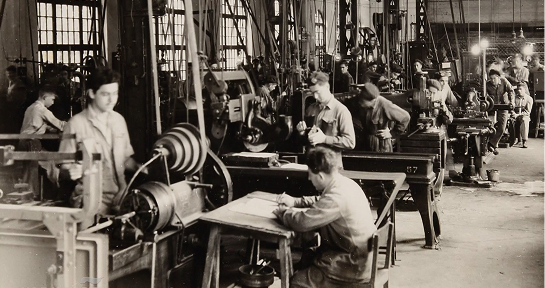
The Technion’s story has been intertwined with Israel’s for more than a century, from laying the foundations for a new nation to shaping its future.

Step inside Israeli innovation at the David and Janet Polak Visitors Center. Experience our 360° immersive movie and tech exhibition. Open to individuals and groups.
Learn More
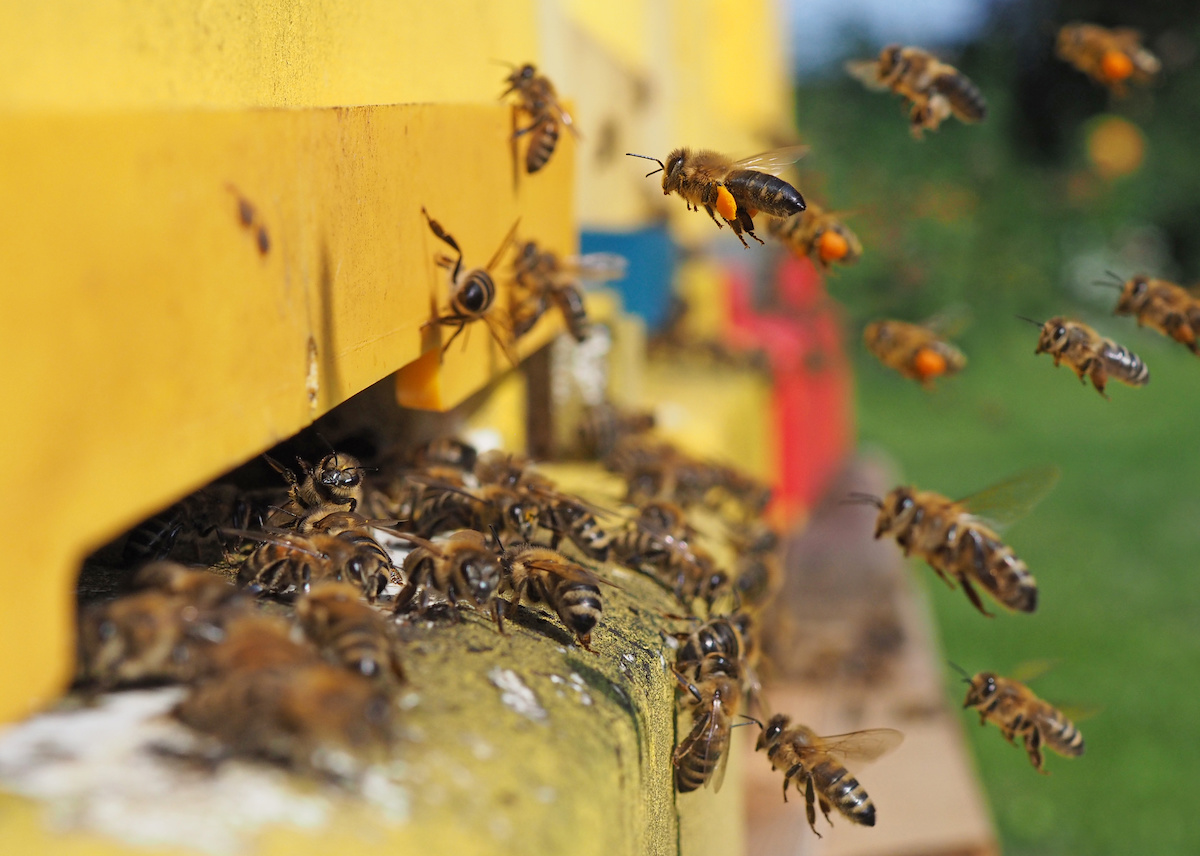
Bees are crucial to our survival. Did you know they pollinate one in every three bites of food we eat? Or that without bees, more than 100,000 species of plants would become extinct? But bees are in danger, as more than half of just North America’s native bee species are declining in size with a quarter of the 4,000 species at risk of extinction. In the hopes of combating this global problem, Israeli startup BeeHero – led in part by Co-founder, CTO, and Technion alumnus Yuval Regev – is using sensors to monitor beehive health and conducting bee-related research. BeeHero’s…
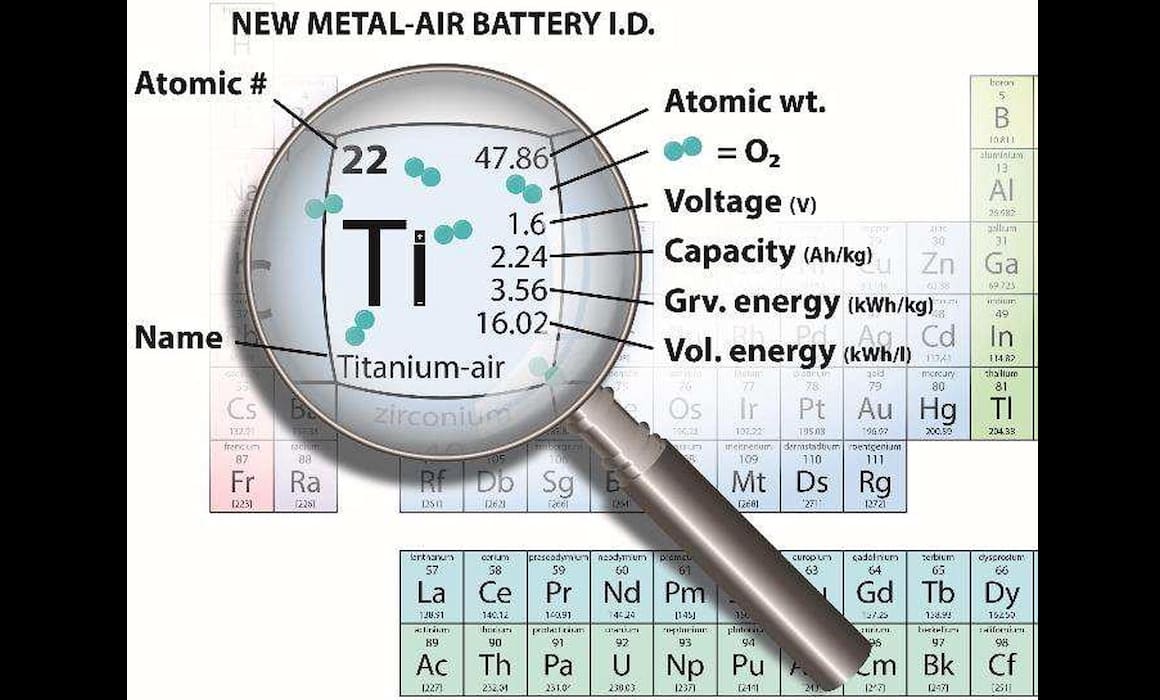
Researchers from the Technion and the Forschungszentrum Jülich research institution in Germany have successfully tested a novel titanium-air battery. The novel battery could theoretically store up to three times more energy than standard zinc-air batteries, and since titanium is the ninth most frequently occurring material in the Earth’s crust, there are plenty of resources available to use in their creation. The team tested the battery’s abilities by applying a liquid consisting of salt with a low melting point, known as ionic liquid (EMIm(HF)2.3F). Its theoretically achievable voltage is in a similar range to that of zinc-air batteries, with an average…
Clean water is crucial for survival, but it is in short supply, with 771 million people living without access to it. It is also a necessity for places that help society function, including power plants, oil refineries, pharmaceutical companies, dairies, breweries, municipalities, textile factories, fish farms, and more. Israeli company Atlantium Technologies, led in part by CTO and Technion alum Ytzhak Rozenberg, is working to help mitigate this widespread issue, by combining old technology developed by a Nobel Laureate with new findings to create their patented disinfection process. Atlantium has combined ultraviolet radiation, or the process of using sunlight to…
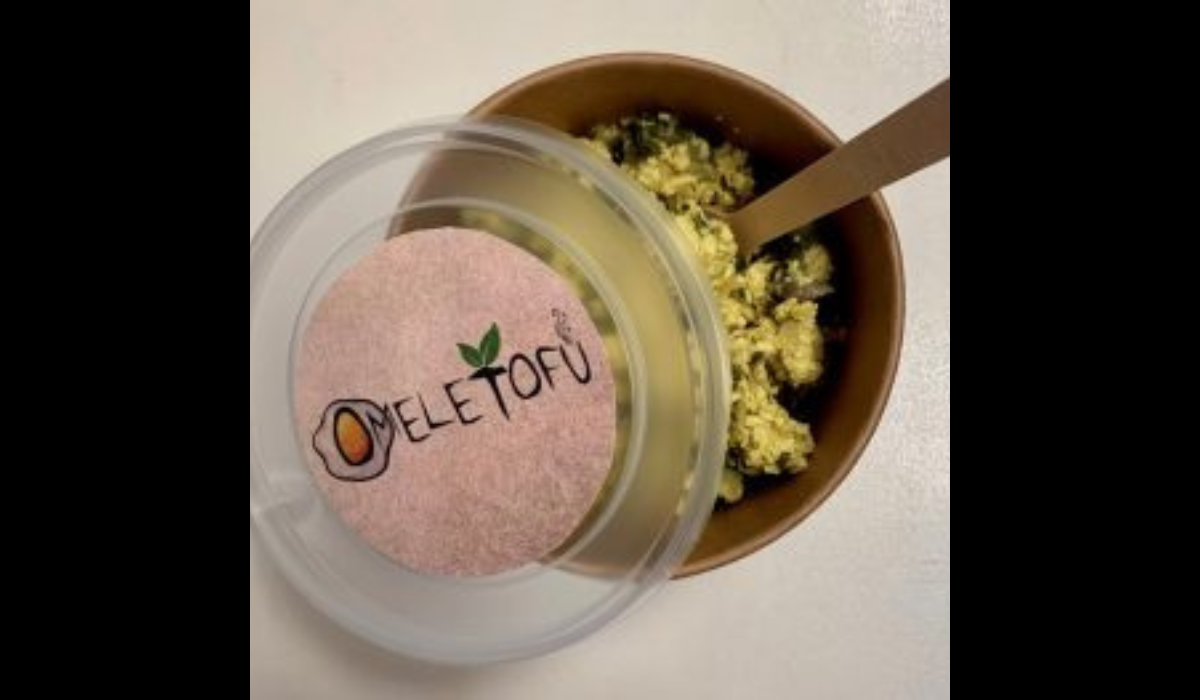
What happens when your vegan boyfriend wants to eat healthy but has little time for food prep? If the girlfriend is a Technion student, she just might come up with a solution. Neta Shimony was among a team of Technion graduate students participating in an international food-tech competition tasked with creating healthy processed food when her boyfriend’s dilemma sparked the idea for a tofu omelet mix. She and her teammates, from both the Faculty of Data & Decision Sciences and the Faculty of Biotechnology and Food Engineering, developed an instant (just add water), freeze-dried, vegan, tofu-based omelet that comes in…
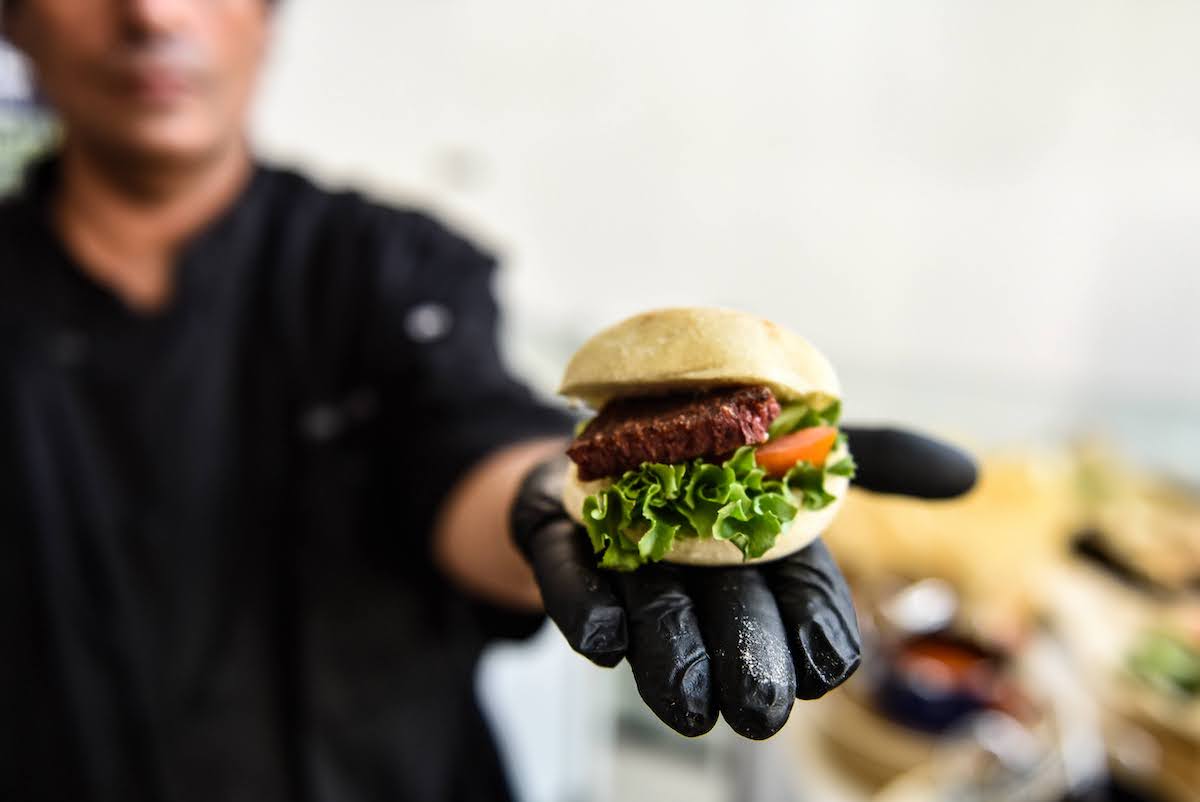
In the interest of helping combat pressing global challenges that include climate change, human health, and nutrition, the Technion recently announced the establishment of the Sustainable Protein Research Center (SPRC). It will function as a world-class multidisciplinary center for fundamental and applied research in the fields of alternative proteins, commercialization and entrepreneurship, and support of industry. The SPRC will be the first of its kind in the world. It will connect dozens of researchers from more than 10 different academic departments at the Technion along with other universities and companies to address the challenges of sustainability and human health which…
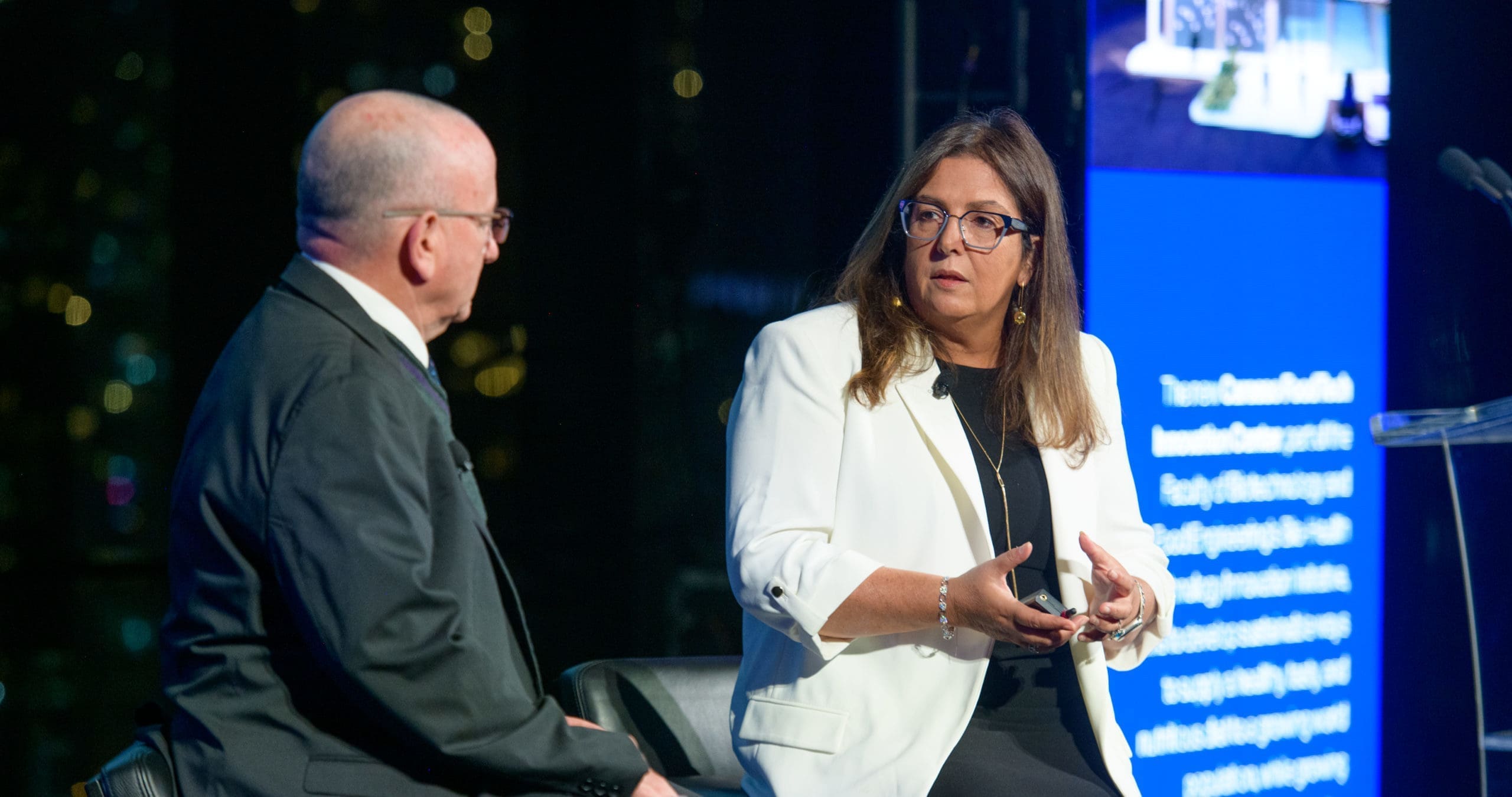
Prof. Marcelle Machluf joined ATS board members and supporters at the Fall National Board Meeting in Chicago and discussed pioneering research in the Technion’s Faculty of Biotechnology and Food Engineering, the only one in Israel, and the Carasso FoodTech Innovation Center. Researchers at the Technion are developing high-protein food alternatives such as milk produced without cows, honey without bees, and falafels made from seaweed, as well as food packaging that is biodegradable and will keep food fresher longer. In November 2022, Prof. Machluf also launched Meatafora. The foodtech startup grows meat directly from animal cells in a scalable, affordable, and…

A third of all food crops are destroyed by diseases annually, which worsens existing global food insecurity. The standard treatment with synthetic fungicides for such diseases is highly toxic, with devastating impacts on soil, crops, wildlife, and consumers. The crops become immune to the fungicides over time, ultimately leaving the plants defenseless. In hopes of solving this pressing issue, researchers at the Technion have developed an environmentally friendly, natural protective spray. Inspired by the natural properties found in the wax crystals that present on lotus and broccoli, the SafeWax anti-adhesive spray is a biodegradable formulation made of non-toxic renewable material….

Startup H2Pro, founded by Technion scientists, has signed an agreement with Morocco’s Gaia Energy to co-develop a gigawatt-scale “green” hydrogen energy project — a potential boon for promoting economic ties between the two countries and combatting climate change. “Climate change is the greatest challenge facing our generation, and it can only be solved by reaching across borders with seamless coordination between the private and public sector,” said Talmon Marco, CEO of H2Pro. The technology at the core of H2Pro was developed by Professors Avner Rothschild and Gideon Grader and Drs. Hen Dotan and Avigail Landman in the Nancy and Stephen…

Israel started to show the world its technological prowess in the 1990s, earned the moniker “Start-Up Nation” in 2009, and its high-tech boom is still going strong. Today, Israel is also emerging as a global food technology leader, second only to the U.S. in raising investments in the field, according to the Good Food Institute’s Israel report. And the Technion is playing a key role in Israel’s pioneering efforts. “Biotech and foodtech are rising and will catch up with high tech,” predicted Professor Marcelle Machluf, immediate past dean of Israel’s only Faculty of Biotechnology and Food Engineering. “People are living…
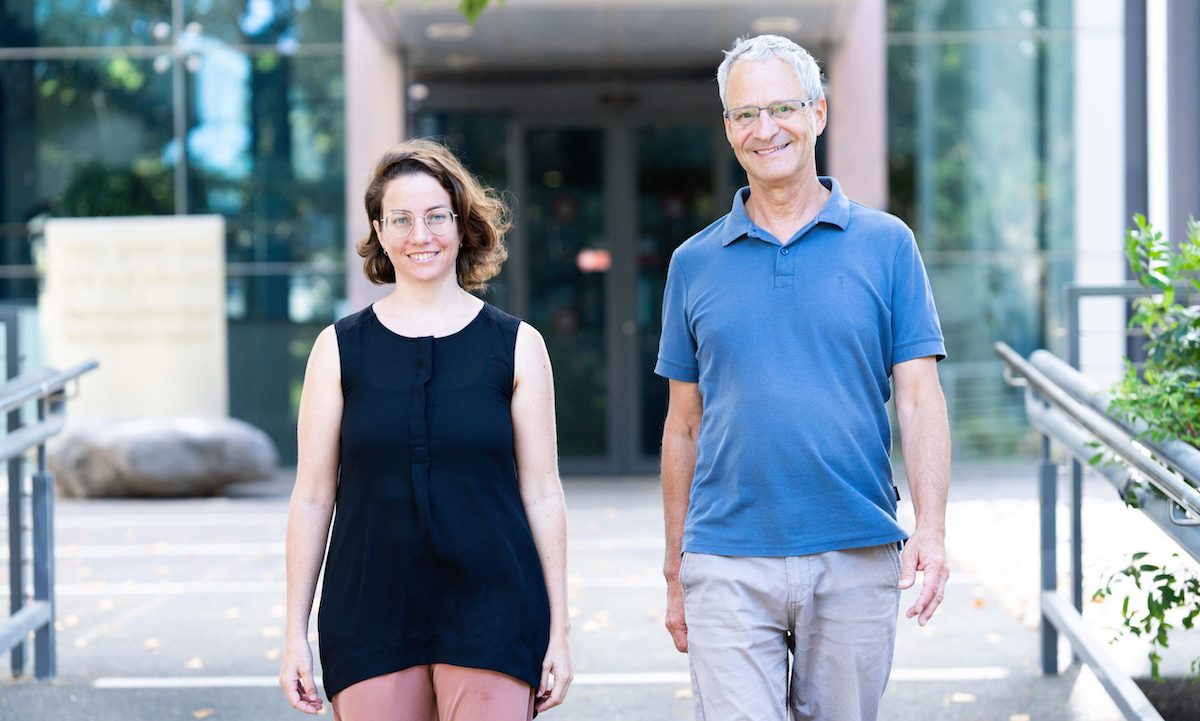
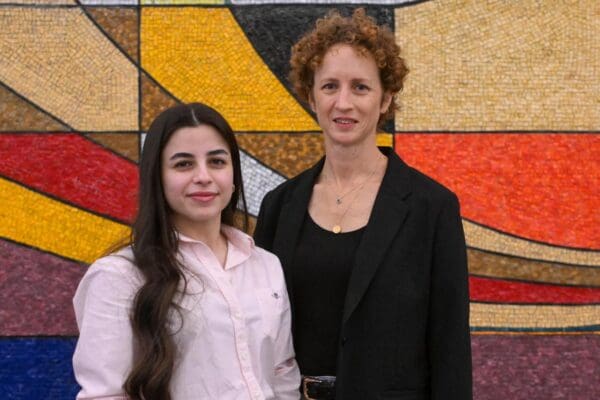
Pictured Above / Dr. Shani Rohatyn and Prof. Yohay Carmel Sounds like an easy fix to climate change: Plant trees in a billion acres of barren land. But that might not be the environmental solution we’re looking for. Studying more than 1.1 billion acres of semi-arid land worldwide, researchers from the Technion and the Weizmann Institute of Science found that contrary to conventional wisdom, turning barren lands into forests won’t cool the planet and could even worsen global warming. Why? Benefits provided by trees can be counteracted by the “albedo effect,” the ability of a surface to reflect light. Dark…
The frequency and duration of droughts has increased by nearly a third since 2000, affecting much of Europe this past summer, including Switzerland. Hundreds of thousands of Floridians were left without clean drinking water when Hurricane Ian hit this fall and the same fate awaited residents of Mississippi just months earlier when severe storms contaminated its wastewater treatment facilities. Access to clean drinking water is becoming increasingly scarce, as more than 2.1 billion people globally lack safe drinking water at home, according to UN reports. That’s why preserving clean water — wherever and however we can — has become a…

Recently, Google acquired Israeli startup BreezoMeter for an estimated $200-250 million. Cofounded in 2014 by Technion alumni CEO Ran Korber, CMO Ziv Lautman, and CTO Emil Fisher, BreezoMeter aims to monitor air quality and improve individuals’ health through atmospheric data collected by sensing stations and AI trained to detect different pollutants. Google already has activity in environmental technology systems, including Google Earth Engine, Explorer, and the Air View project, so BreezoMeter will be a welcome addition. BreezoMeter’s technology provides users with hyperlocal air quality data through machine learning and advanced algorithms. The information it shares currently includes environmental data and…