Something Fresh in the State of Denmark
October 06, 2026




















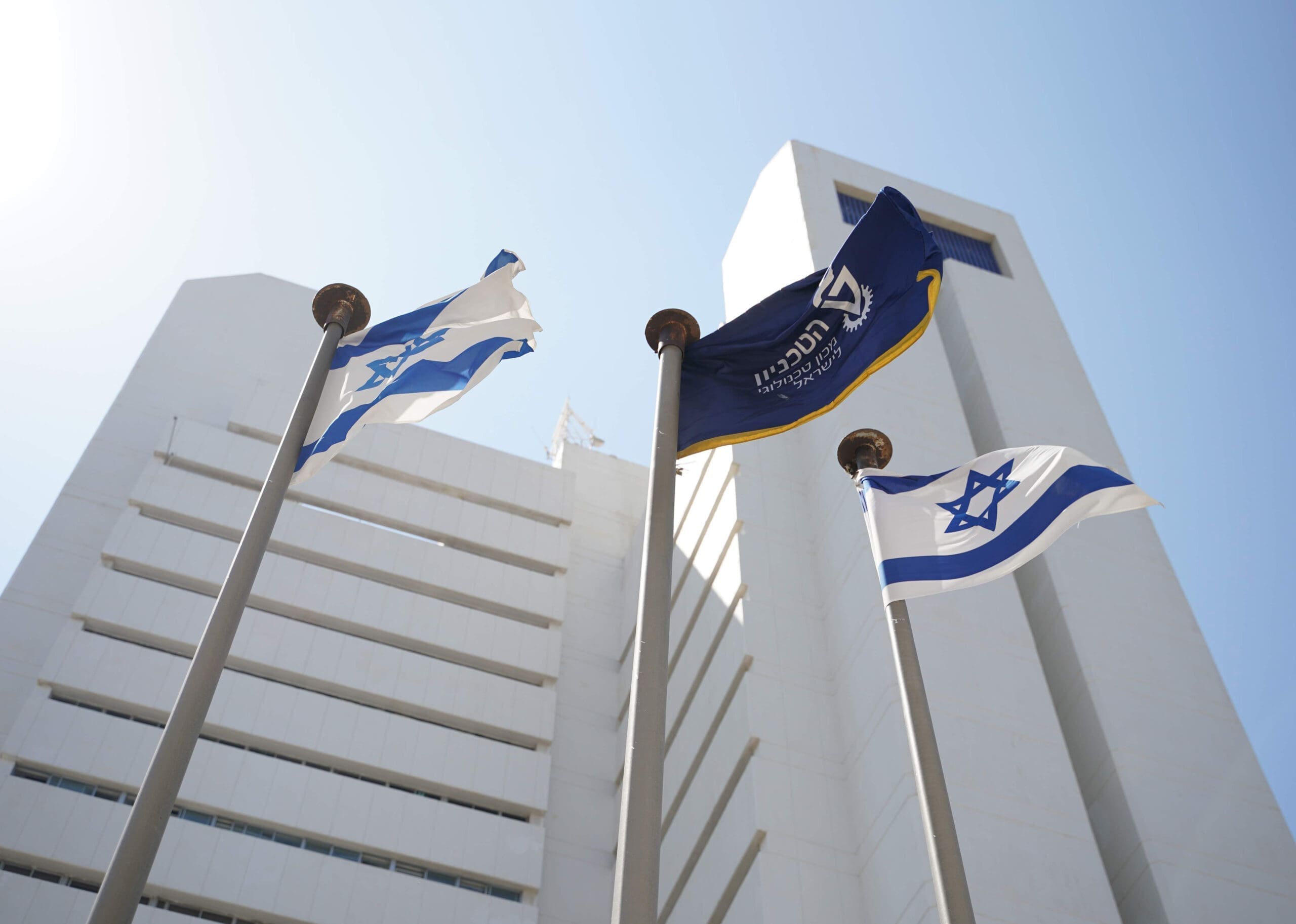





The Technion’s story has been intertwined with Israel’s for more than a century, from laying the foundations for a new nation to shaping its future.

Step inside Israeli innovation at the David and Janet Polak Visitors Center. Experience our 360° immersive movie and tech exhibition. Open to individuals and groups.
Learn MoreProf. Raz’s research focuses on the theory and application of efficient network and system management, ensuring the smooth operation of cloud computing and other increasingly complex network environments. His key areas of expertise include cloud resource management, network function virtualization (NFV), software-defined networking (SDN), traffic engineering (TE), and network-aware services. Prof. Raz earned his bachelor’s degree from The Hebrew University of Jerusalem and both his master’s and Ph.D. from the Weizmann Institute of Science. After completing his Ph.D., he served as a visiting lecturer at the University of California, Berkeley, and as a postdoctoral fellow at the International Computer Science…
He is also a key member of the Technion’s Center for High-Speed Flight (TeCHFlight), which is working on hypersonic technology that will enable practical, aircraft-like access to space and could eventually lead to much faster commercial air travel across the globe and a vital “rapid-response” component to national security. Prof. Lefkowitz’s group in the Combustion and Diagnostics Laboratory aims to drive advancements in combustion engineering and address challenges related to zero-carbon fuel implementation, high-speed propulsion, and pollutant formation in combustion devices. Of their research, he says, “If you want to live in a world where we reduce the carbon dioxide…
His research interests include information and coding theory with several applications for non-volatile memories, associative memories, DNA storage, data storage and retrieval, and more. His current work on advancing coding solutions for memories and systems and their application in state-of-the-art storage systems includes a focus on the theory and practicality of DNA storage systems. Prof. Yaakobi received bachelor’s degrees in computer science and mathematics, as well as his master’s degree in computer science, from the Technion, and his Ph.D. in electrical engineering from the University of California, San Diego. From 2011 to 2013, he was a postdoctoral researcher at the…
She previously served as executive vice president for innovation and industry relations at the Technion. Her research focuses on computer vision, AI and machine learning, and haptic feedback — technology that interacts digitally with physical objects by applying force, motion, or vibrations. Today we take for granted that we can hear and see each other remotely on a variety of devices. Through advances in haptic technology, Prof. Zelnik-Manor hopes that eventually we will be able to use touch to pat our dog or tuck our grandchild into bed on a video call. Applications could also extend to medicine where doctors…
Prof. Mawase focuses his work on the principals of motor control and on brain rehabilitation — deciphering the mechanisms that determine the extent of recovery following a stroke. Using tools from behavioral and computational neuroscience and functional imaging of the brain, he aims to bridge the gap between basic science and clinical applications. For example, Prof. Mawase and a team of researchers from the Technion and the Rabin Medical Center, guided Shaked Ron, then a medical and undergraduate student, in his work for the annual 2019 student project fair in the Faculty of Biomedical Engineering. Ron took first place for…
Prof. Avron is a mathematical physicist who collaborates effectively with mathematicians and experimentalists on a wide rage of problems in quantum physics. His research focus in the last decade shifted to application of quantum physics to quantum computing and quantum technologies. He is interested in the control and manipulation of quantum systems, enhanced precision and sensitivities, and the advantages that come from quantum entanglement. He enjoys working with students, doing theory, mathematical physics, geometry, and animations. Prof. Avron has lectured and written extensively on subjects as esoteric as quantum entanglement and as popular and captivating as “Quantum Games” and…
Prof. Cidon comes to the Institute from VMware Research, where he served as Vice President and led research on high-performance, geo-distributed networks spanning IoT, data centers, and public clouds. His work aimed to enable and optimize modern distributed applications. Prior to VMware, Prof. Cidon was a chaired professor at The Technion-Israel Institute of Technology. As a faculty member, he published over 180 peer-reviewed papers. His research contributions include new architectures for wireless and wireline networks, multi-cloud overlay networks and networks on chip for which he was nominated to an IEEE fellow. He held the position of Dean of the Andrew…
He heads the Lab of Biopolymers for Food and Health in the Faculty of Biotechnology and Food Engineering, is associated with the Russell Berrie Nanotechnology Institute, and is the director of the recently launched Sustainable Protein Research Center (SPRC) at the Technion. Prof. Livney’s lab aims to improve human health through both medicine and food. Among the team’s medical diagnostic and treatment projects is the development of targeted nanoparticles to treat drug resistant gastrointestinal cancers, lung cancer, prostate cancer, and ovarian cancer. In the area of food research, they are investigating methods of enriching beverages with nutraceuticals, boosting the proportion…
His research focuses on harnessing the inherent properties of proteins, including their functions, interactions with the environment, and the way they fold and unfold. Through these efforts, he aims to drive significant advancement in biomaterials. His studies also center on understanding the complex interactions between polymers and proteins, aiming to uncover how these two elements influence materials’ mechanical and microstructural aspects. This work contributes to the development of innovative hybrid biomaterials. Drawing on insights from these comprehensive investigations, he aims to engineer biomaterials that seamlessly combine the unique characteristics of polymers and proteins. These materials have potential applications across various…
The Laboratory of Food Materials Engineering, which she has led since 2015, develops foods that are more nutritious and sustainable without compromising taste. Too much saturated and trans fats found in products like butter, cheese, and red meat can lead to heart disease and other health problems. Prof. Davidovich-Pinhas is developing “bigels” — a combination of water-based and oil-based gel-like alternatives created from water, plant oils, and edible materials such as plant proteins that can be used to replace unhealthy fats. Other research in the lab includes the development of eco-friendly edible food packaging material and the use of oleogel…