Gal Harari: Forged by the Technion, Building Israel’s Military Edge
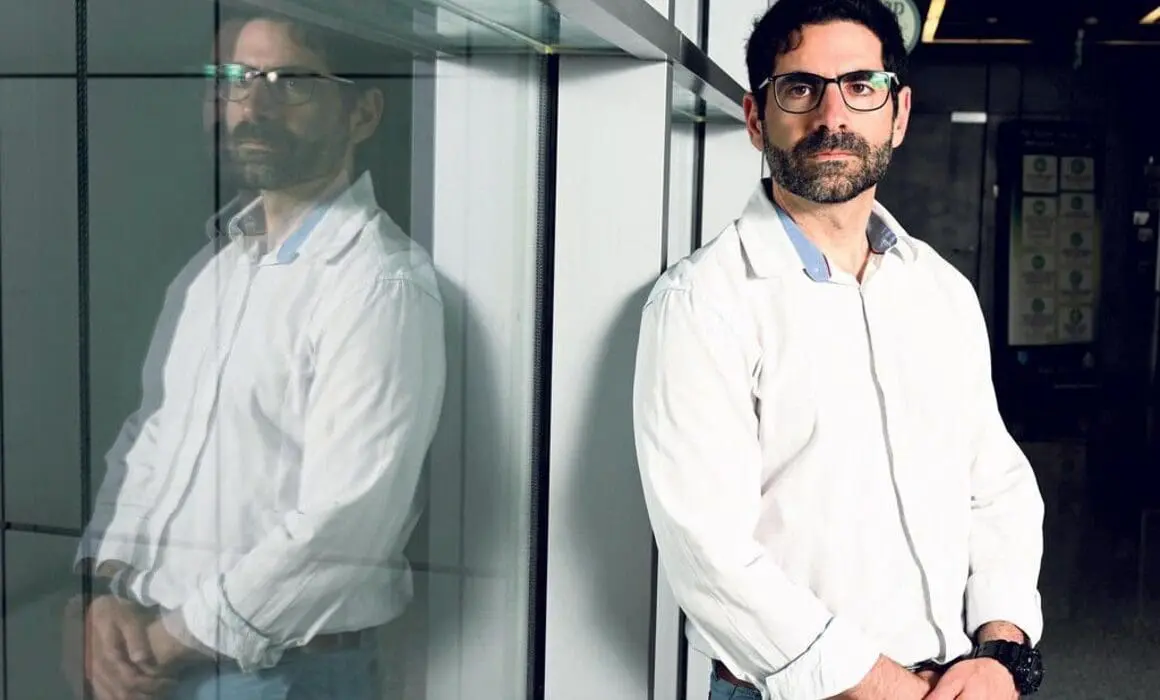
When Gal Harari ’06, M.S.’12, Ph.D. ’17 speaks about the Technion, it’s with admiration and gratitude. “The Technion has made me a man of technology,” said the chief technology officer of Israel’s Directorate of Defense Research and Development (DDR&D), a joint body of the Israel Ministry of Defense (MOD) and the Israel Defense Forces (IDF) mandated to preserve the technological superiority and military edge of the State of Israel.
Harari’s journey began on a kibbutz, where academic ambition was not the norm. “We grew up on the narrative of being combat soldiers and working in agriculture,” he recalled. But his aptitude for mathematics and physics led him to the Technion through the IDF’s elite academic reserve program, known in Hebrew as Atuda.
The program allows talented high school graduates to defer their mandatory military service to complete special academic programs that will be of use during their service. “I didn’t have a clue what academic studies were,” he said. “I chose the Technion based on its reputation.”
That leap of faith changed everything. “It was the first time I was challenged,” he said. “The Technion provided an amazing educational environment. The people around me were top of the class … some even geniuses, I would say.” He pursued dual degrees in physics and materials engineering. Two years later, he went back for both a master’s and doctorate in physics, while still working for the DDR&D as an officer in the IDF.
Today, Harari is a civil servant in the MOD, where he supervises a large team comprising many Technion graduates and leads some of Israel’s most advanced defense initiatives. He took part in the early days of the Iron Beam laser defense system and oversaw the development of camouflage materials that can conceal soldiers in varied environments. “Our unit is probably the largest R&D organization in Israel,” he noted. “We sit at the junction between what needs to be done and what could be done.”
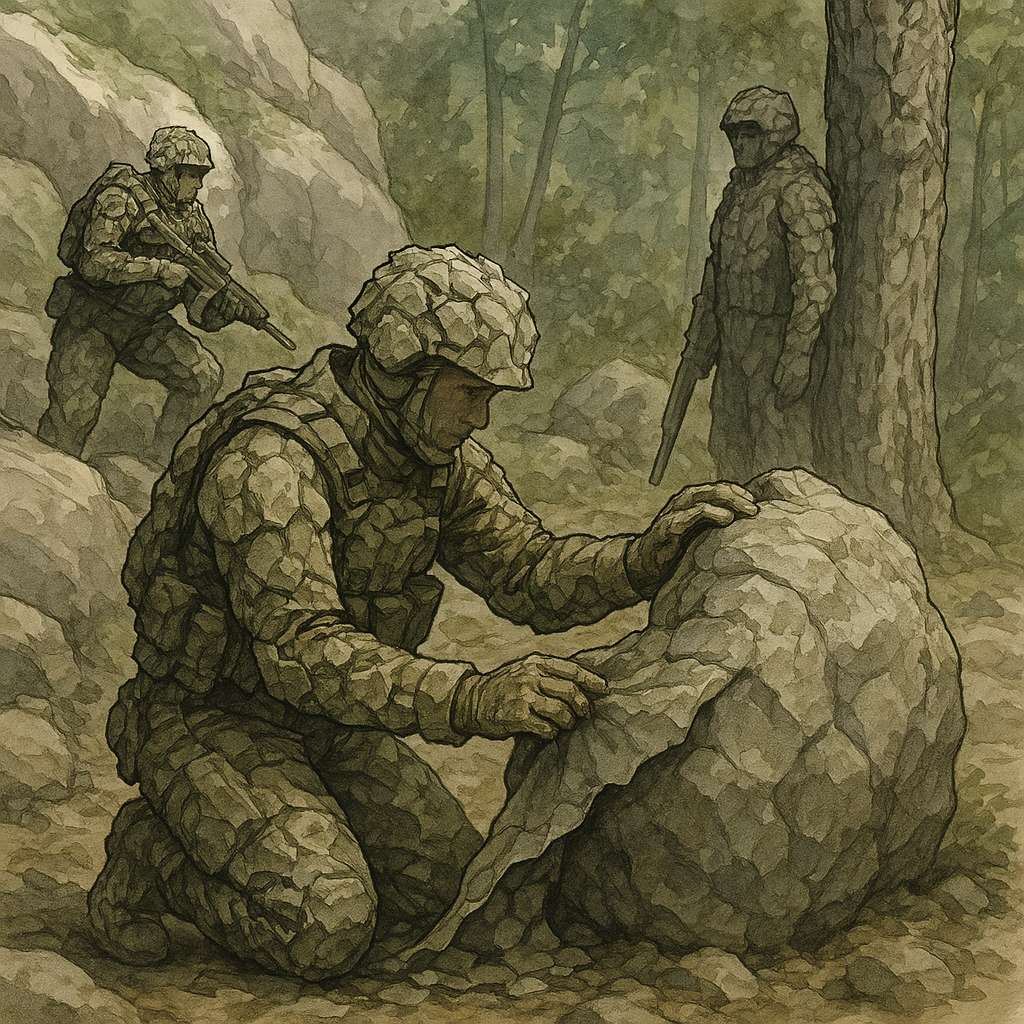
The development of camouflage materials that conceal soldiers and can be molded to take the shape and look of objects like rocks and trees (AI simulation).
To meet that goal, Harari works with startups, big industry, and academia. “Many of the startups we work with are led by Technion alumni,” he said. “They’re often the CTOs, the CEOs, or other decision makers.” His current focus is on deep tech — the foundational technologies that will shape the future of defense: microelectronics, photonics, AI, and autonomous systems.
“Israel’s advantage lies in our qualitative military edge,” he said. “And that edge depends on mastering the building blocks of technology.” That means hiring the best thinkers and engineers in the country, which brings him back to the Technion.
The connection between the Technion and Israel’s national defense, Harari emphasized, is not incidental.
We get our best engineers from the Technion. They’re methodological, they’re tough, and they’re capable of taking on advanced programs.”
Gal Harari
He points to specific Technion-led breakthroughs, such as the development of Israel’s first infrared detectors, which revolutionized military night vision capabilities, munitions, tanks, and rocketry.
His office collaborates regularly with Technion laboratories on fundamental scientific research, including the Advanced Defense Research Institute and the University’s expertise in high-speed flight. “We work with many of the Technion faculties,” he said. He points to the Technion’s specialized programs in aerospace, electrical engineering, and electro-optics.
The Technion didn’t just educate Harari; it transformed him. “It really changes your notions, your language, your intuition,” he said. “It gave me the liberty to hop from one area to another —lasers, navigation, semiconductors, brain-machine interfaces. That’s thanks to the sound fundamentals I got there.”
Beyond academics, the Technion gave Harari something more personal: mentorship and lifelong friendships. He credits Mordechai (Moti) Segev, the Robert J. Shillman Distinguished Professor of Physics and Electrical and Computer Engineering, under whom he completed his Ph.D., as a pivotal figure.
“He’s a globally recognized physicist and leader in the field of optics and photonics,” said Harari. “He helped shape me as a scientist and as a person.” Harari also cites Prof. Joseph (Yosi) Avron and current Technion President Prof. Uri Sivan as formative influences. “It’s not just science and technology. It’s meeting the right people with the right mindset.”
Asked to sum up what the Technion gave him, Harari didn’t hesitate: “The foundation to become who I am.” That foundation now supports not just his career, but also the safety and security of an entire nation.