Something Fresh in the State of Denmark
October 06, 2026





























The Technion’s story has been intertwined with Israel’s for more than a century, from laying the foundations for a new nation to shaping its future.

Step inside Israeli innovation at the David and Janet Polak Visitors Center. Experience our 360° immersive movie and tech exhibition. Open to individuals and groups.
Learn More

“Stay positive,” we’re told when suffering from an illness. It’s easy to dismiss such comments as platitudes from well-meaning friends. But Technion scientists have demonstrated that activation of the brain’s reward system can boost recovery from a heart attack. Establishing the connection between the two can potentially lead to therapeutic avenues for intervention. “It’s time that both researchers and clinicians take the link between psychology and physiology seriously,” said Technion Associate Professor Asya Rolls, a psychoneuroimmunologist and pioneer in mind-body interactions. Scientists have previously shown that the emotional state can influence the course of disease following a heart attack. But…

Modern medicine allows people to live longer and better, but with these life-enhancing therapies comes a risk of what clinicians call an adverse drug reaction (ADR) and laymen know as side effects. This is especially the case with polypharmacy (when patients take five or more drugs at the same time), says Liat Primor, veteran of the pharmaceutical industry and CEO and co-founder of FeelBetter, a startup dedicated to improving outcomes for patients taking multiple medications. “Sometimes patients have not only one condition, they have plenty – 10 or 15 – and they take so many medications,” Primor tells NoCamels. “They…

A groundbreaking way of measuring fluid buildup in the body allows chronic heart failure patients to monitor their condition and treat it independently with a physician-approved response. Tel Aviv-based startup Vectorious has created a tiny pressure sensor that is implanted directly into the heart. It is the only sensor in the world that measures the pressure in the left atrium (one of the heart’s two upper chambers) and is able to identify increases in that pressure caused by a buildup of fluid in the body. This data on the left atrial pressure (LAP) is then transmitted to an app for…
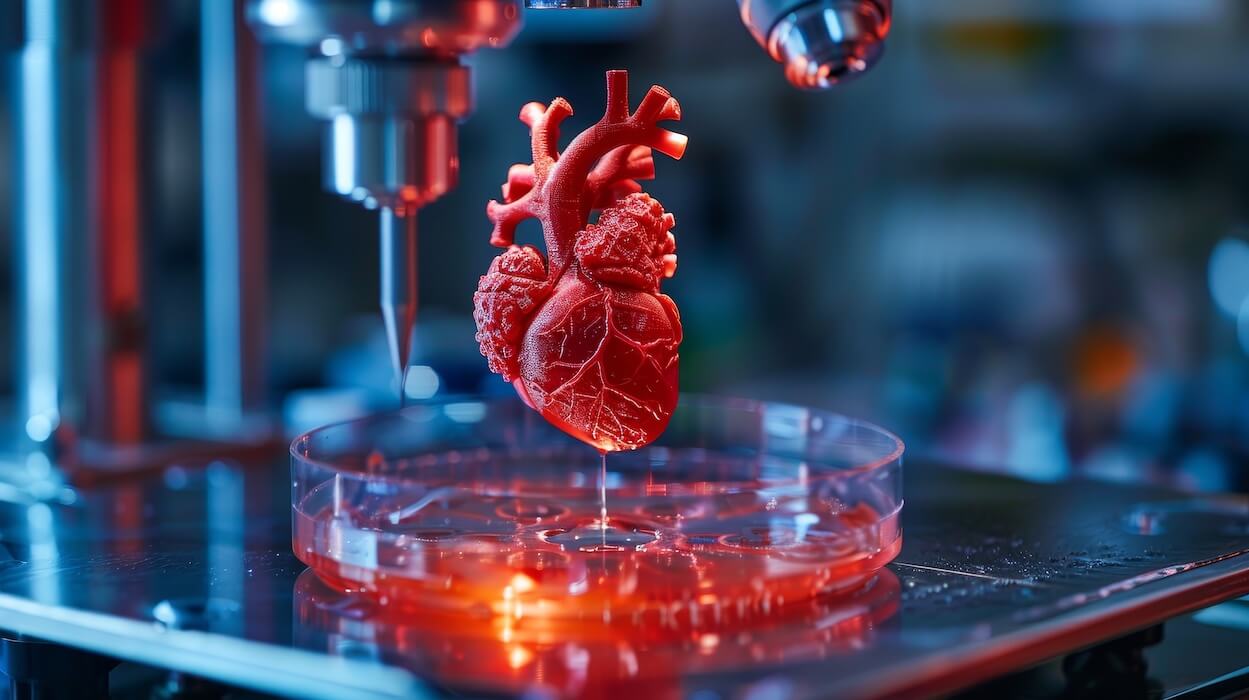
Globally, there is a persistent shortage of viable organs for transplantation. This unmet need has spurred the development of “engineered organs” — cultivated tissue that mimics the structure and function of livers, hearts, lungs and other vital viscera. While these in-vitro inside parts can be used to fill the gap in organ supply, it’s really hard to supply blood throughout the newly transplanted tissue. To solve this problem, Bonus Biogroup, an Israeli biotechnology company specializing in next-generation tissue regeneration therapies, has developed a method of producing a sophisticated network of artificial blood vessels that will enable reliable blood flow to transplanted artificial organs, drastically…

Israeli AI-assisted colonoscopy technology has been given the seal of approval from the internationally respected Lancet Digital Health journal, following an extensive study of its capabilities. The novel polyp detection system developed by Haifa-based MAGENTIQ-EYE was studied by the Lancet over a 14-month period at 10 leading medical centers around the world, involving 31 endoscopists and 952 patients. The study, titled “A computer-aided polyp detection system in screening and surveillance colonoscopy: an international, multicentre, randomised, tandem trial,” found that the MAGNETIQ-EYE platform increases the average detection rate for adenoma (non-cancerous or pre-cancerous tumors) by 7 percent, and had a 17-percent lower rate of missed…

Ra’anana-based Inspira Technologies today announced the signing of a non-binding Letter of Intent with Shamir Medical Center (Assaf Harofeh), a step the company hopes will lead to providing better respiratory care both here in Israel and in the global community. “With the anticipated FDA approval on the horizon, I am confident that this prospective collaboration with Shamir Medical Center will enhance the efficacy of life-support care and establish a pathway for its adoption in both local and international markets,” president of Inspira Technologies Joe Hayo said in a press release. The Letter of Intent (LOI) with Shamir will test the performance of the INSPIRA…

Soon, cancer patients will have an additional treatment option, moving away from relying solely on chemotherapy, which often has deleterious side effects. The current one-size-fits-all approach to treating many diseases will soon be replaced by personalized (or precision) medicine. Essentially, the patient’s DNA will be sequenced, to analyze subclass diseases and identify the cause of the mutation. With a better understanding of disease mechanisms, patients can be diagnosed with great precision and the treatment can be tailored specifically to the target. For breast cancer alone, there will be more than 20 drugs designed to cure each specific type. Thai PBS…

Dental implants, made of titanium or titanium alloys, are widely used to provide a durable solution to missing teeth and restore functionality. While the long-term success rate is relatively high (75% at 20 years), the largest contributor to implant failure is peri-implantitis, an inflammatory disease affecting the soft and hard gum tissues around the implant, causing jawbone regression and gradual exposure of the implant’s threads. As of today, there is no viable clinical solution to delay or stop the progression of the disease. Moreover, the reasons for the development of peri-implantitis are not well understood. Patients may blame themselves for…

People suffering from narrowed or semi-blocked arteries in their legs can find themselves in a vicious cycle – not doing any exercise because of the pain it entails, but finding that the lack of activity only exacerbates the condition. A newly developed implant that sits just under the skin on the leg is intended to dilate and enhance blood flow through those narrowed arteries with ultrasonic waves, allowing crucial oxygen-rich blood to reach the lower limbs and ease the pain. Peripheral Artery Disease (PAD) is a condition that restricts the flow of oxygenated blood from the heart to the legs,…

An Israeli developer of a handheld device that uses light to noninvasively detect pressure ulcers under the skin has received a patent from the country to support future commercial use. IR-MED‘s PressureSafe device is placed on the surface of the skin and exposes it with infrared light. It then evaluates the light intensity and patterns reflected by the different layers beneath the skin’s surface and uses an algorithm to determine whether the patient has a pressure ulcer. Pressure ulcers are sores that are caused by sustained pressure being placed on a particular part of the body, interrupting the blood supply…

Israeli and US medtech companies have teamed up to create a program that uses artificial intelligence to identify patients at high risk for respiratory or pulmonary diseases such as lung cancer. The LungFlag AlgoMarker, which analyzes data from a patient’s electronic health record, is a collaboration between Medial EarlySign, a Hod Hasharon-based company that develops clinical predictive analytics, and Geisinger, an integrated healthcare system from Pennsylvania. Working with Geisinger, Medial EarlySign developed the program to facilitate earlier invention, which is a key feature of the American healthcare provider’s care model as it helps improve clinical outcomes, creates higher patient satisfaction and reduces…

Parkinson’s disease is a complex, progressive neurological disorder affecting up to 10 million people worldwide. Probably caused by clumps of alpha-synuclein protein that damage dopamine-producing cells governing motor control, Parkinson’s is characterized by tremor, rigidity, poor posture and slow movement. About 150 Israeli startups are developing technologies to help prevent, stop or even cure Parkinson’s. Azilect (rasagiline), one of the most successful drugs for managing Parkinson’s symptoms, was developed in Israel by Prof. Moussa Youdim and is manufactured by Teva Pharmaceuticals.