
Building a Sustainable Israel
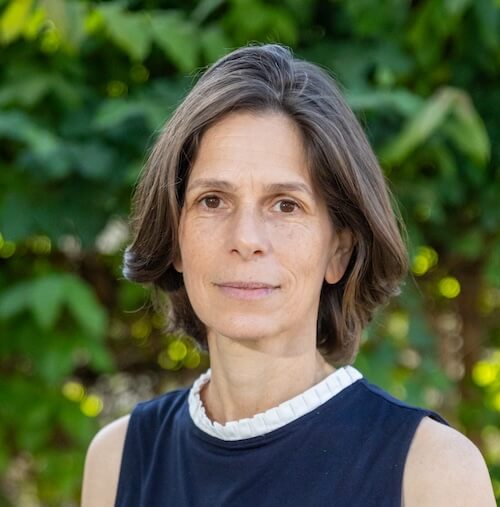 When Yaara Ben Nahum reflects on her journey from academia to environmental activism, one institution stands out as a turning point: the Technion. It wasn’t just where she earned her master’s degree in organizational psychology in 2009; it was where she found the tools, mentors, and mindset to help reshape Israel’s future.
At the Technion, Yaara worked under the guidance of Prof. Miriam Erez, a pioneering figure in organizational psychology. “I had the privilege to follow in giant footsteps,” she said of Prof. Erez. “She broke so many glass ceilings because she didn’t even see them. She’s an inspirational person to this day for me.”
Erez’s insistence on grounding theory in real-world practice deeply influenced Yaara’s approach. She learned that meaningful change doesn’t happen in isolation. “Many researchers do great work in labs, but Miriam always insisted on going into companies and organizations to research what’s actually happening. It’s hard; it takes ages, and the statistics are daunting, but the results are meaningful.”
This hands-on, field-based methodology became the foundation of Yaara’s work at the Technion Innovation Center, where she helped traditional industries enhance their innovation capabilities — not just by generating ideas, but by implementing them. “We were focused on how management works within itself, how it enhances creativity and innovation,” she said. “It was a great school for me.”
But Yaara began to feel a growing discomfort with the concept of infinite growth while the world is facing sustainable challenges. “We live in a finite planet; thus, nothing can grow infinitely,” she said. “We were talking about measurements for company progress, but I kept asking what are we measuring, and at what cost?”
That discomfort led her to join the fellows program at the Heschel Center for Sustainability, where she found language for her unease. “I got words to my feelings,” she explained. “I learned what’s broken about our system — our banking, our economics, our social structures — and how they cause environmental threats. At the same time, I found an optimistic and compassionate approach to how these challenges can be solved.”
Years later, Yaara joined the Heschel Center as the strategic manager for energy restoration in peripheral communities. Today, she is a driving force behind sustainable transformation in Israel. She works in two major circles: one focused on climate adaptation with local municipalities, and another on transitioning Israel to renewable energy. Her work bridges policy and practice, theory and community.
“We work bottom-up and top-down,” she said. “We want a just transition to renewable energy — one that leaves no one behind.”
Rebuilding Resilience in the Gaza Envelope
Nowhere is Yaara’s work more urgent, or more personal, than in the Gaza envelope. Prior to October 7, she had already spent two years supporting local authorities in developing climate adaptation and mitigation plans. That groundwork became vital in the aftermath of the tragedy.
In the wake of the attacks, Yaara was asked by the Western Negev Regional Cluster and the Ministry of Energy to assess the region’s energy needs and shape a recovery strategy. She helped form a team to advance renewable energy and energy resilience across the region.
“I have family and friends in the South, including Kibbutz Nir Oz that was hit badly on October 7. So, this work became deeply personal.”
Her work includes:
- Establishing an Energy Promotion Center to help households install rooftop solar systems
- Promoting Energy Resilience Centers in every village and kibbutz to ensure secure electricity access during emergencies
- Supporting Kibbutz Nir Oz, where she helped shape energy blueprints for rebuilding efforts
- Tackling energy poverty by upgrading homes in Sderot with affordable, climate-smart improvements to withstand extreme heat
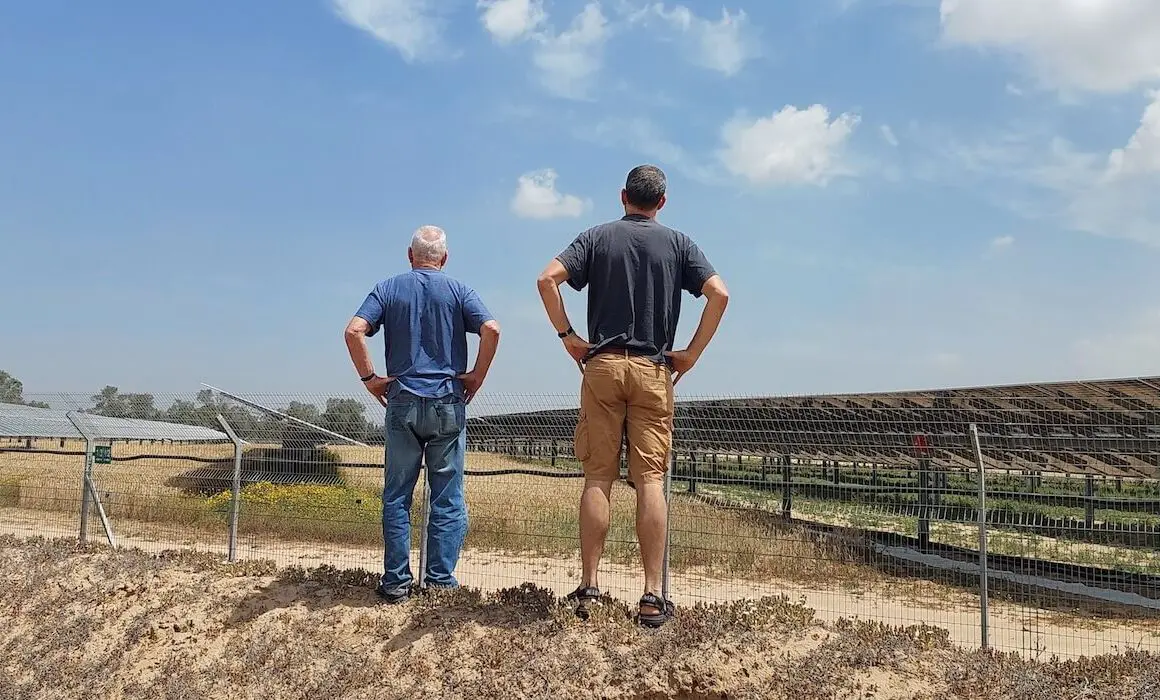
- Mapping agrivoltaic zones to ensure solar fields are placed in environmentally responsible locations, preserving biodiversity and scenic landscapes
“We try to use energy as a means to generate steady income for the communities and strengthen their energy resilience,” she explained. “Because we know the government often steps in and then steps away, our goal is to equip communities with the tools to sustain themselves well into the future.”
Yaara’s projects are as practical as they are visionary. She’s helped local authorities navigate bureaucratic hurdles to install solar panels and advocated for tariff reforms to make rooftop solar more accessible. For Yaara, “meaningful change is about cooperation and truly listening to local needs, while holding on to the vision that a just, sustainable solution is possible.”
Her journey is a testament to the power of education, mentorship, and vision. Yaara does not consider herself a traditional Technion alum, but her work embodies the University’s spirit: rigorous, grounded, and transformative. Through her leadership, Israel is not only innovating, it’s evolving toward a more just, sustainable future.
Top photo: Agrivoltaics combine the cultivation of crops or livestock alongside the generation of electricity from solar panels. Ensuring that scenic landscapes and biodiversity are not hindered is an important goal.