Something Fresh in the State of Denmark
October 06, 2026























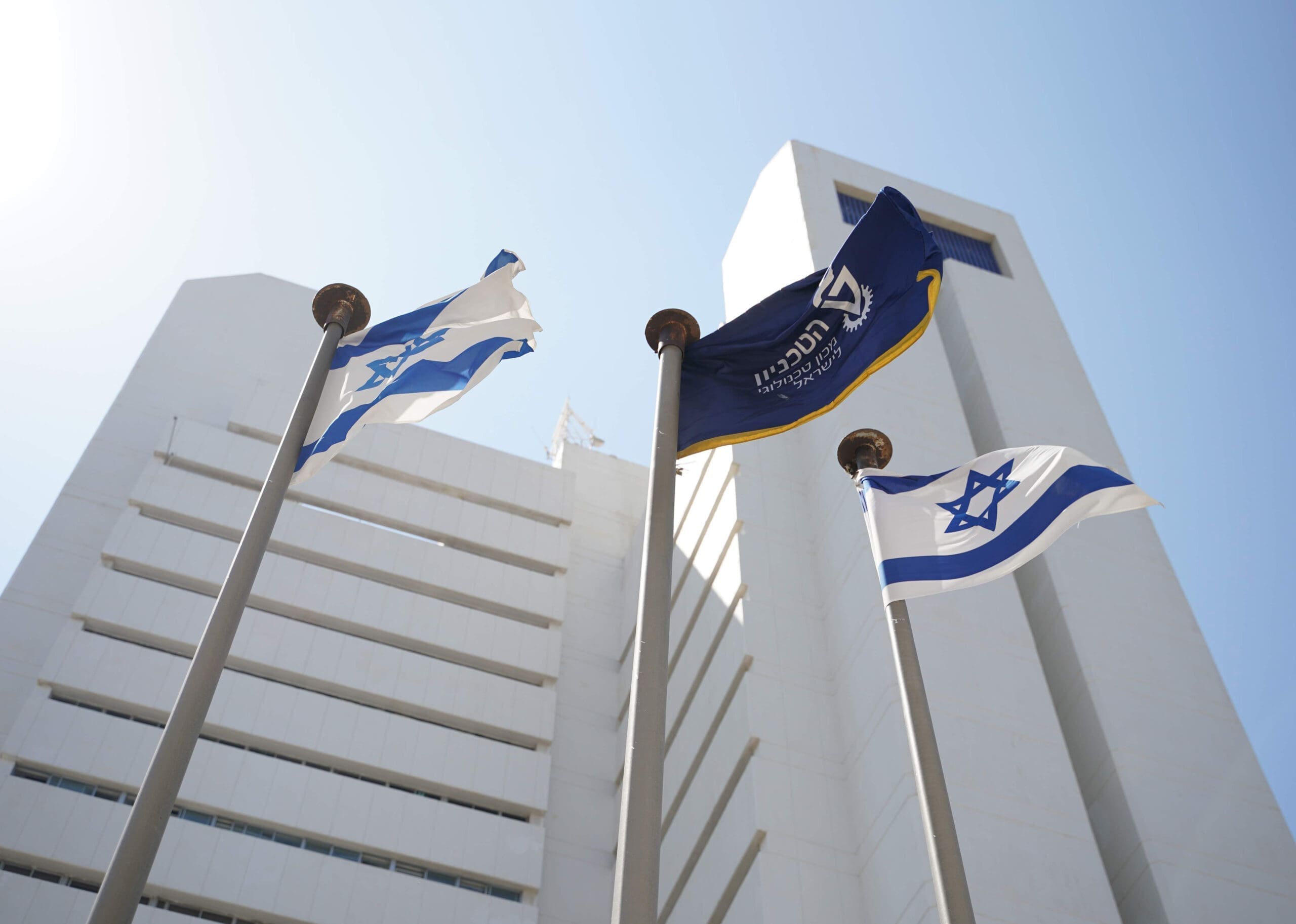






The Technion’s story has been intertwined with Israel’s for more than a century, from laying the foundations for a new nation to shaping its future.

Step inside Israeli innovation at the David and Janet Polak Visitors Center. Experience our 360° immersive movie and tech exhibition. Open to individuals and groups.
Learn More

“When we say agriculture, we think green and plants and land, it sounds very sexy. But the reality is that agriculture is one of the major contaminants in the world, both in terms of groundwater contamination and greenhouse gas emissions,” says Rafi Levi. “And fertilizers are the No. 1 contaminant in agriculture.” Levi is the CEO and cofounder of DOTS (Data of the Soil), an Israeli startup bent on helping farmers cut down on the use of excess fertilizers by providing them with real-time monitoring of fertilizer in the soil. This can save them a lot of money and, of course, protect…

Lynda and Stewart Resnick, co-owners of California-based The Wonderful Company, have pledged $50 million to transform the Technion’s research of sustainability and catalysis. The Stewart and Lynda Resnick Sustainability Center for Catalysis will recruit scientists and promote research collaborations with industry to uncover new ways to maintain global population growth while protecting the planet for future generations. “The Resnicks’ philanthropic vision demands forward-thinking action to preserve and protect our planet,” said Michael Waxman-Lenz, CEO of the American Technion Society. Rapid population growth and longer life expectancies are projected to result in more than 10 billion people living on Earth in…

Since its founding nearly 100 years ago, the Technion’s world-class scientists have focused on developing innovative and cutting-edge technologies crucial not only for Israel’s economy, society, and security, but also for humanity. Well before climate change became a buzzword on the lips of many, the university’s researchers prioritized solutions to promote sustainability and help reverse our planet’s grim prognosis. In March, United Nations’ Secretary-General António Guterres warned that “the climate time-bomb is ticking,” after a report cautioned that the world faces an even tighter deadline to avoid catastrophic climate change disruption. At the Technion, a wide range of activities and…
Forget about evolution, climate change or vaccines – what makes people really lose their mind, apparently, is cats. “We’ve had posts that have affected people’s lives in a very substantial way, including posts that went beyond the virtual world. People really got threats or disrespectful comments,” says Yomiran Nissan. “For example, when we wrote about the very, very viral topic of street cats and the ecological problems that they pose. It led to a lot of anger, both virtual and in the real world.” Nissan is the CEO of Little, Big Science, an Israeli NGO dedicated to bridging the gap between…

One of the things that sets the quantum world apart from our everyday classical one is the capacity for entanglement—when two or more objects share an invisible connection that entwines their fates. Entanglement is the most extreme version of a quantum connection, where measuring one particle can tell you everything you need to know about another. Short of that, particles can still sync up in decidedly quantum ways, where measuring one particle will give you some incomplete information about another. Such quantum correlations can be used to make more precise measurements than classical ones. For example, they can help us detect gravitational waves….

Researchers have theorized a new mechanism to generate high-energy “quantum light,” which could be used to investigate new properties of matter at the atomic scale. The researchers, from the University of Cambridge, along with colleagues from the U.S., Israel and Austria, developed a theory describing a new state of light, which has controllable quantum properties over a broad range of frequencies, up as high as X-ray frequencies. Their results are reported in the journal Nature Physics. The world we observe around us can be described according to the laws of classical physics, but once we observe things at an atomic scale,…
What if we could use water in solar water heaters to supply electricity during power outages? That was the winning idea in a recent hackathon that challenged brilliant Technion students to develop solutions to cope with extreme heat waves in urban areas. It’s something that is critically important, since Israel is warming at twice the rate of the rest of the world and heat-related deaths are also on the rise. The competition launched two weeks prior to the hackathon event with a lecture by Naama Shapira of the Technion’s Samuel Neaman Institute that was focused on mapping challenges in the…

The Technion was recently selected as an international partner for the Chicago Quantum Exchange (CQE), an intellectual hub for the advancement of science and engineering of quantum information. Based at the University of Chicago, the CQE works to connect leading academic talent, top scientific facilities, and prominent members and partners to advance research and train the quantum workforce of tomorrow. Central to the partnership will be the Helen Diller Quantum Center at the Technion, which stretches across six faculties of science and engineering: Physics, Electrical Engineering, Computer Science, Chemistry, Materials Science, and Engineering and Mechanical Engineering. More than 50 faculty…
The Technion Human Health Initiative Brings Medical Research and Technology to the Next Level It takes a village of scientists to tackle the increasingly complex health and medical issues of our time. The Technion is assembling a venture to do just that. Learn about the new Technion Human Health Initiative (THHI), a gathering of Technion […]

Technion’s Ingenious Approach to Sustainable Food Tech Featuring Professors Marcelle Machluf, Ester Segal,and Uri Lesmes The world’s food system is reaching a crisis point: waste, overfishing, deforestation, greenhouse gas emissions from farming, and more are destroying the planet. As the global population keeps growing, food security is fast becoming one of the major challenges facing […]
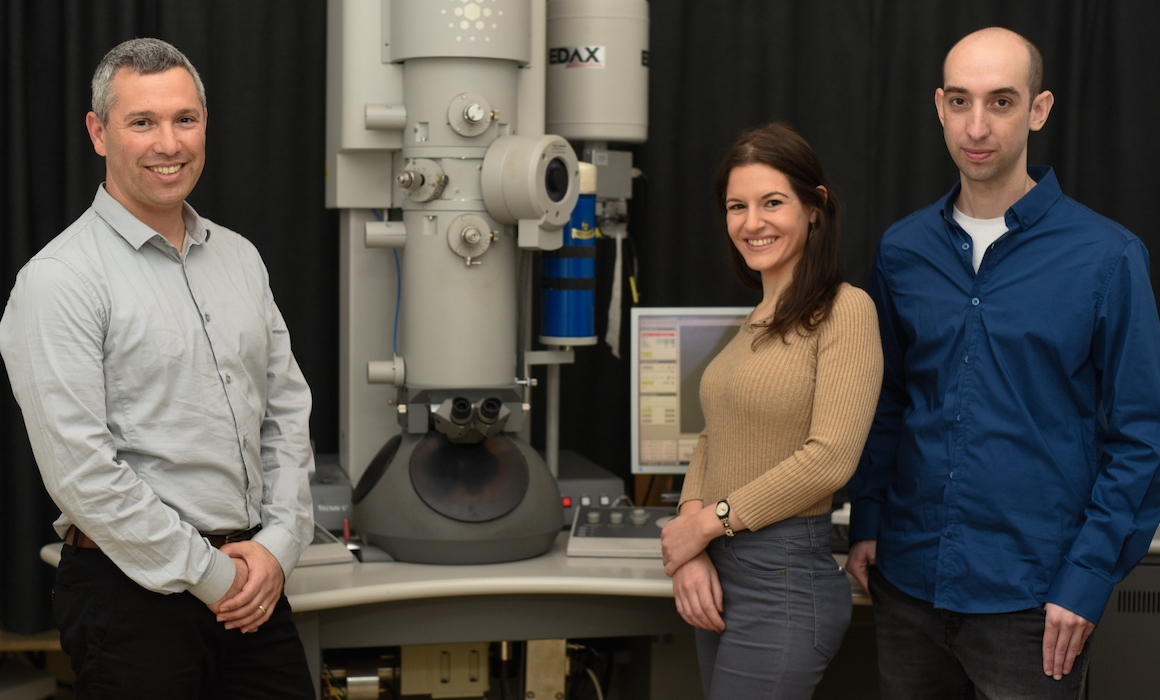
Pictured Above / ( L-R): Professor Yehonadav Bekenstein, Sasha Khalfin, and Noam Veber (Credit : Rami Shelush) What if damaged solar panels or even the cracked screen of your cell phone could heal themselves overnight? Technion scientists have developed self-repairing nanocrystals that might make that scenario a reality. Led by Assistant Professor Yehonadav Bekenstein of the Faculty of Material Sciences and Engineering, the researchers happily stumbled upon the discovery while searching for an environmentally friendly alternative to toxic lead-based perovskites, materials that are commonly used in solar panels. The scientists were using a transmission electron microscope (TEM) to take videos…
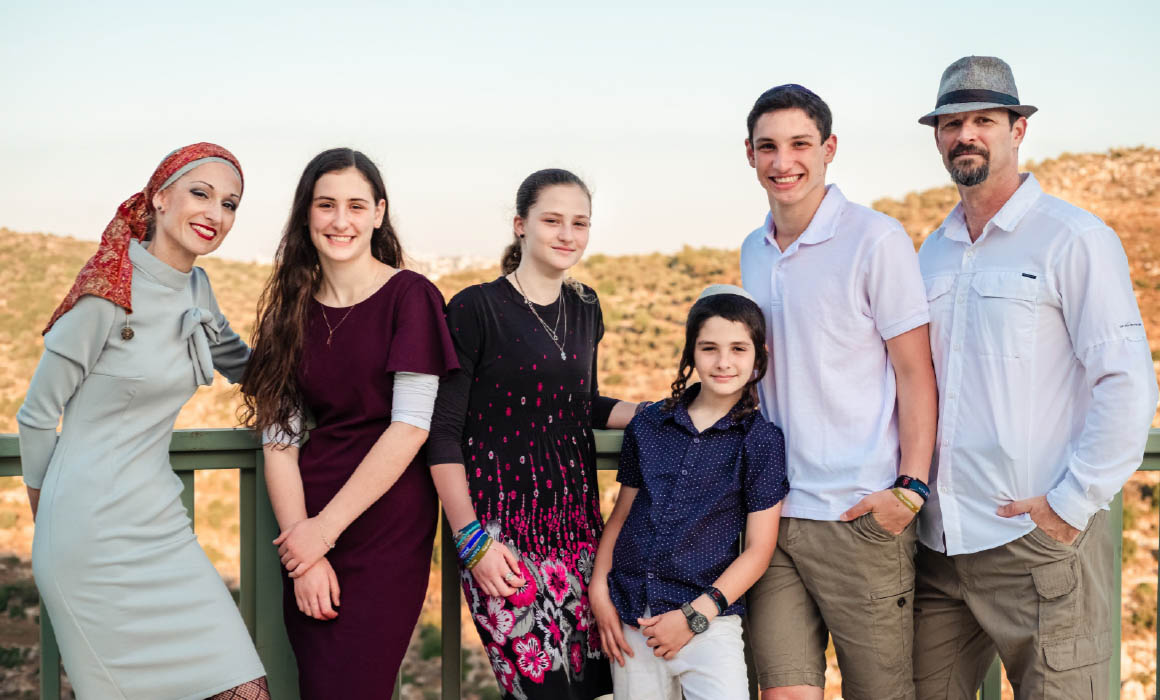
Technion’s Ties to Industry Helped Her Become a Biotech Leader Iris Grossman always thought she’d become a neurologist, but as a Ph.D. candidate at the Technion, she worked closely with Teva Pharmaceuticals and fell in love with personalized medicine. Her expertise in science and analytics has opened doors to high-level positions and consultancies at Teva, GlaxoSmithKline, Eli Lilly, and Takeda, as well as chief scientific officer roles at CAMP4 Therapeutics and Amide Technologies. Currently, she is chief strategy officer at the Israeli-British Eleven Therapeutics. Dr. Grossman, a modern Orthodox mother of four who currently resides in Boston, is part of…