Something Fresh in the State of Denmark
October 06, 2026



























The Technion’s story has been intertwined with Israel’s for more than a century, from laying the foundations for a new nation to shaping its future.

Step inside Israeli innovation at the David and Janet Polak Visitors Center. Experience our 360° immersive movie and tech exhibition. Open to individuals and groups.
Learn More
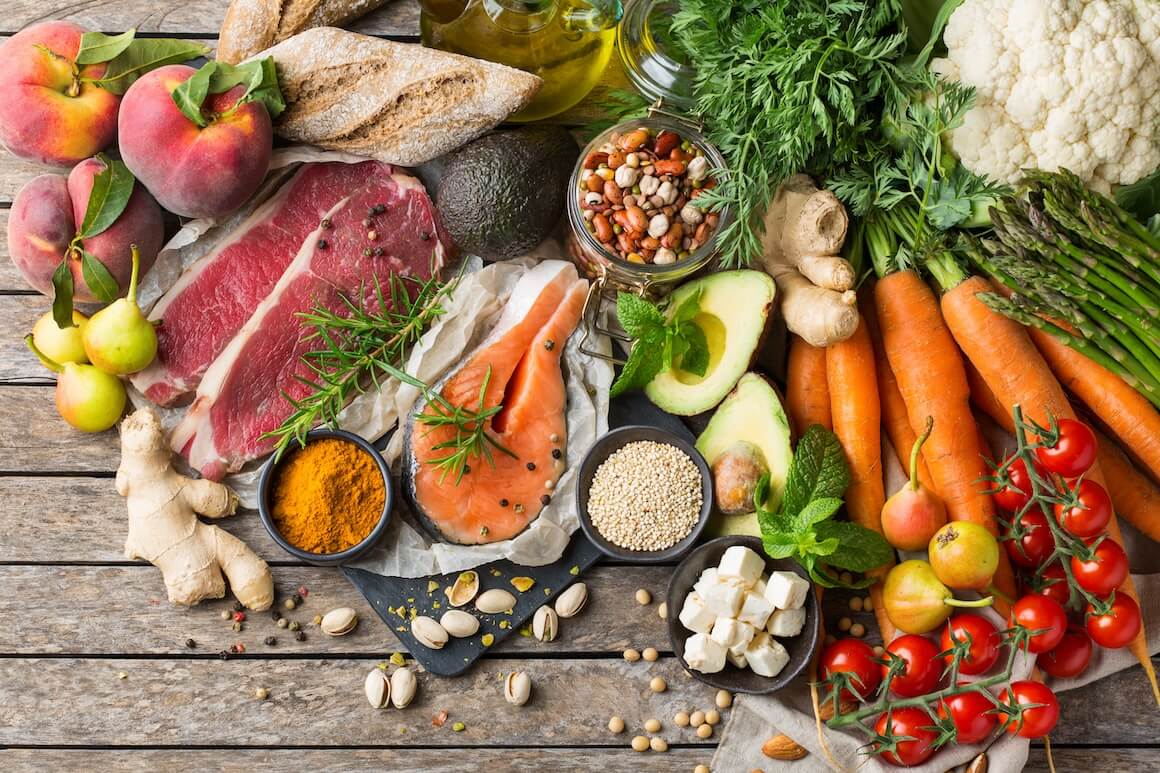
Following October 7, nearly 90% of Israel’s farms were impacted by the war and experienced a 35% drop in production due to the loss of farmworkers and fields damaged by missiles (MIGAL Galilee Research Institute, Nov. 11, 2023). For a desert country with highly managed water resources and a high birth rate, ensuring food security for current and future generations is especially critical. It’s a daunting task — and one the Technion is tackling head-on. Researchers, students, and alumni are already pioneering sustainable, nutritious food alternatives and preservation methods to combat waste, extend product shelf life, and pave the way…
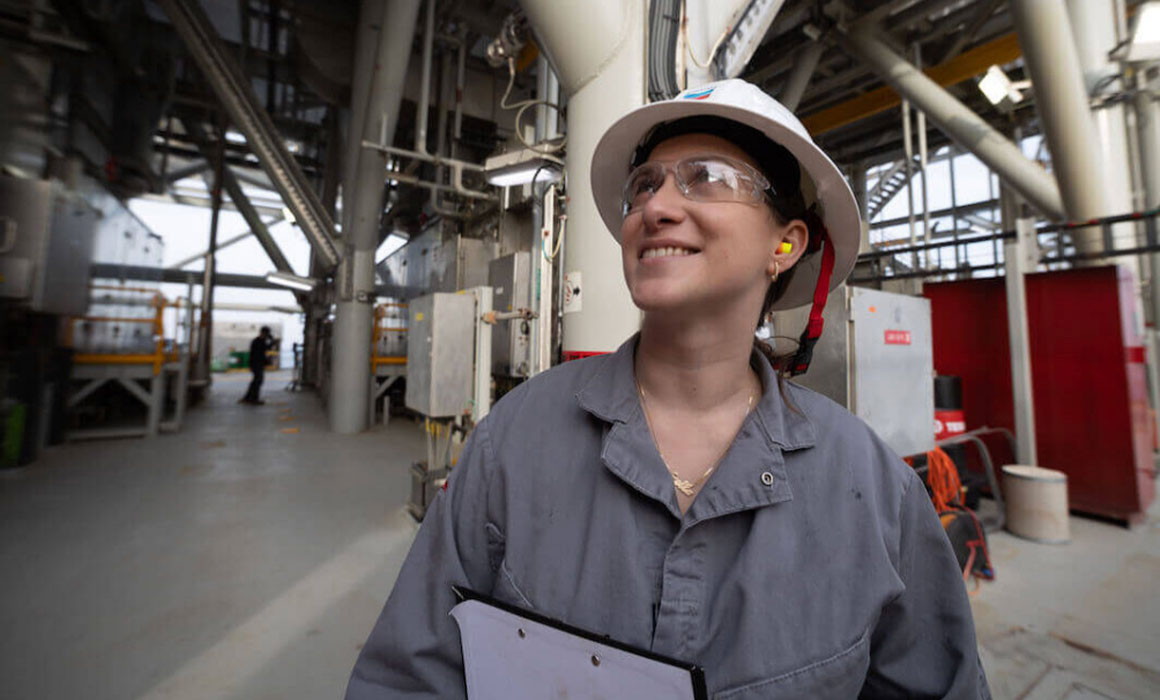
Rafaella Waissertreiger admits with a chuckle she is losing touch with what’s fashionable these days. Each morning, she dons gray, flame-resistant pants and a work shirt, steel-tipped boots, safety goggles, earmuffs, and hard hat, before heading upstairs to work on the Tamar gas platform in the Mediterranean Sea, approximately 15 miles from Ashkelon. Graduating from the Technion in 2020, chemical engineering degree in hand, she is one of Israel’s new breed of workers — a natural gas engineer. “It’s an honor to help reduce the air pollution in Israel, and to be part of the nation’s efforts to become…
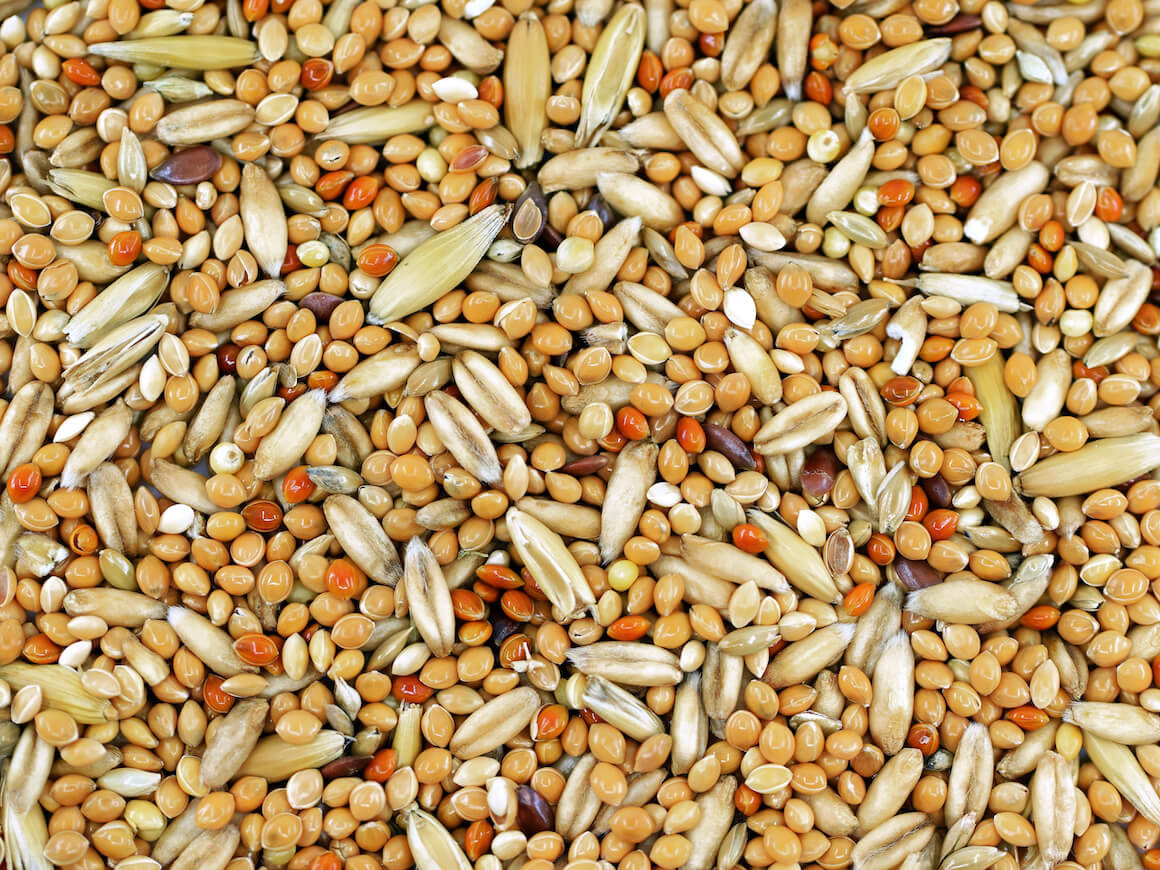
It’s not just humans – plants get stressed too. And like the rest of us, when they get stressed they tend to “shut down” and simply not produce. The most common kind, abiotic stress, is from intense heat or cold, prolonged dry spells or unhealthy levels of salinity due to rising sea levels and the intrusion of seawater into agricultural fields. How bad is it? More than 830 million hectares of agricultural land is now overly salty. Heat stress is expected to threaten nearly three-quarters of the world’s food production over the next 20 years, according to the research group Verisk…

An Israeli foodtech startup that makes milk and other dairy products from mushrooms has partnered with one of America’s biggest biotech companies, Ginkgo Bioworks, to scale-up and produce affordable animal-free non-whey dairy products. Haifa-based ImaginDairy has bioengineered milk protein to create a wide range of dairy products using mushrooms but no cows. Through a process called precision fermentation, ImaginDairy recreates these milk proteins in the lab and can use them to generate any kind of dairy product. The partnership aims to improve cost-effective production of non-whey dairy proteins. Ginkgo will utilize its AI capabilities to create biological systems that reduce the cost of production,…

Buying produce, and then having it quickly go bad, is a common disappointment for many. One Israeli startup has developed a solution that keeps fruits and vegetables fresh for longer without changing or adding anything to the produce themselves. Ness Ziona-based Liva has developed a sticker that when applied to the package, can extend the freshness of fruits and vegetables for up to another seven days. The sticker was created by Ifat Hammer, co-founder and CTO, drawing on her expertise in food engineering and biotechnology. She figured that instead of modifying the produce itself, “good” bacteria that was already present in the…

A Technion Earth Day Webinar With the health of our planet failing, we need big ideas and innovative solutions to reverse the current environmental crisis. In this enlightening webinar, a distinguished panel of Technion scientists share their insights and research on topics that include sustainable development, renewable energy solutions, sustainable material innovations, and eco-friendly alternatives for chemical processes. Be inspired when you learn how Technion science can help forge a healthier planet and a better future for all. Executive vice president for research at the Technion Prof. Noam Adir moderates this can’t-miss webinar.

Scientists at the Technion have come upon a surprising discovery that could help frustrated would-be fathers determine their fertility. If validated in humans, this discovery could lead to a reliable, fast, and simple method for diagnosing male infertility, and “could predict the success of assisted reproductive techniques such as IVF or evaluate the fertility of stud animals,” said Technion Professor Benjamin Podbilewicz. The result came unexpectedly, when baby hamster kidney cells surprisingly merged into a single giant cell with multiple nuclei. Scientists discovered that the ability of mice sperm to merge those cells corresponded to the sperm’s fertilizing potential –…
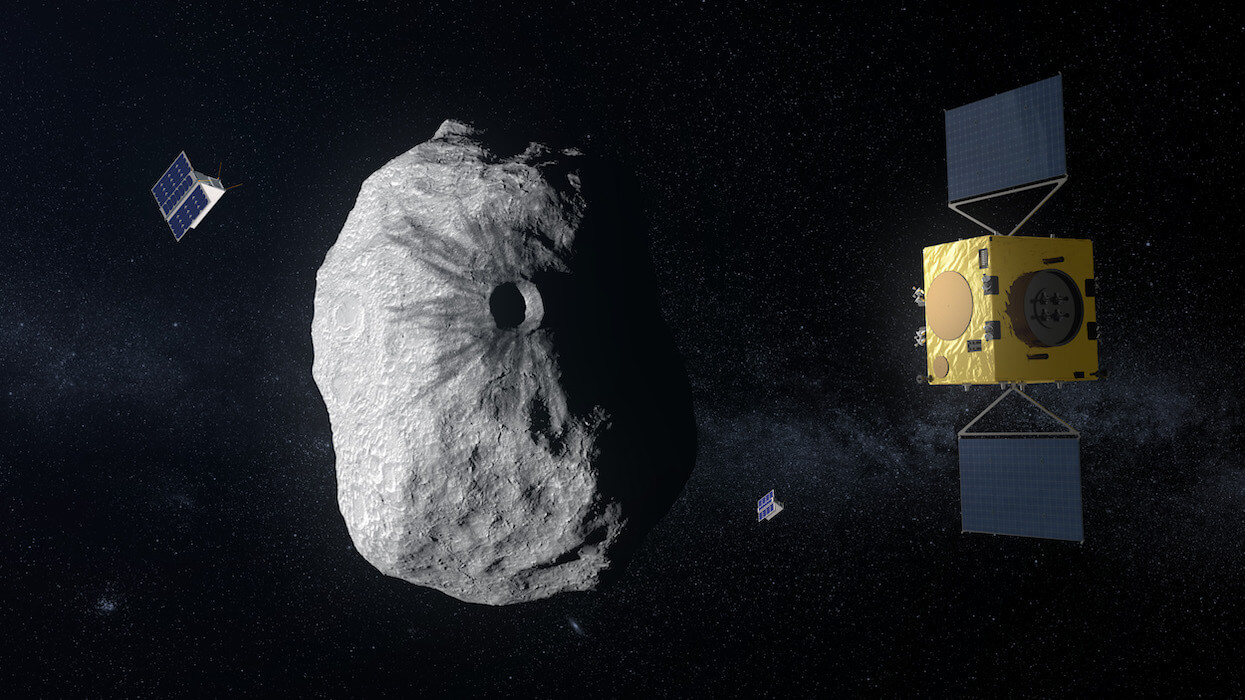
Ever since scientists embraced the evidenced-backed theory that an asteroid impact on Earth caused the extinction of dinosaurs, researchers, sci-fi enthusiasts, and ordinary citizens have been concerned about it happening again. This possibility has been depicted in various dystopian films, books, and TV series, including “Don’t Look Up,” “Deep Impact,” and Amazon Prime’s hit TV show, “Expanse.” In reality, the phenomenon remains a tangible threat that experts are studying worldwide. And now Technion researchers are participating in the Hera project, led by the European Space Agency (ESA), which marks the first attempt in history to divert an asteroid from its…

A sensor that measures the “heartbeat” of a plant is being used by farmers around the world to optimize the growing process, most notably how much water it needs, at a time when weather patterns are shifting and becoming unpredictable due to climate change. Almost all plants, big and small, rely on the process of photosynthesis (using light, carbon dioxide and water to produce oxygen and energy), and the correct conditions are crucial for its survival. But for farmers, knowing how much water to give each plant can be an inexact science, with agriculturalists generally relying on experience and intuition…

Scientists throughout the world are seeking ways to develop greener power sources. Both solar and wind energy solutions are great alternatives to fossil fuels when conditions are sunny or windy, but figuring out how to store energy for use when the weather doesn’t comply is the big challenge. Hydrogen fuel cells have great potential for energy storage and conversion, but they remain highly expensive to operate. Now thanks to a collaboration between scientists at the Technion and Stanford University, a major obstacle has been overcome. “This solution has great benefits for the research of fuel cells in academia as well…

Scientists led by Nanyang Technological University, Singapore (NTU Singapore) have developed and simulated a new energy-efficient way to generate highly focused and finely controlled X-rays that are up to a thousand times more intense than those from traditional methods. The findings are published in the journal Light: Science & Applications. This paves the way for ultra high-quality X-ray imaging that uses powerful X-rays for detecting flaws in semi-conductor chips accurately. The new method could also allow more focused X-ray imaging to be done for health screening while using less energy. The novel method is based on computer simulations that shoot electrons at an ultra-thin…
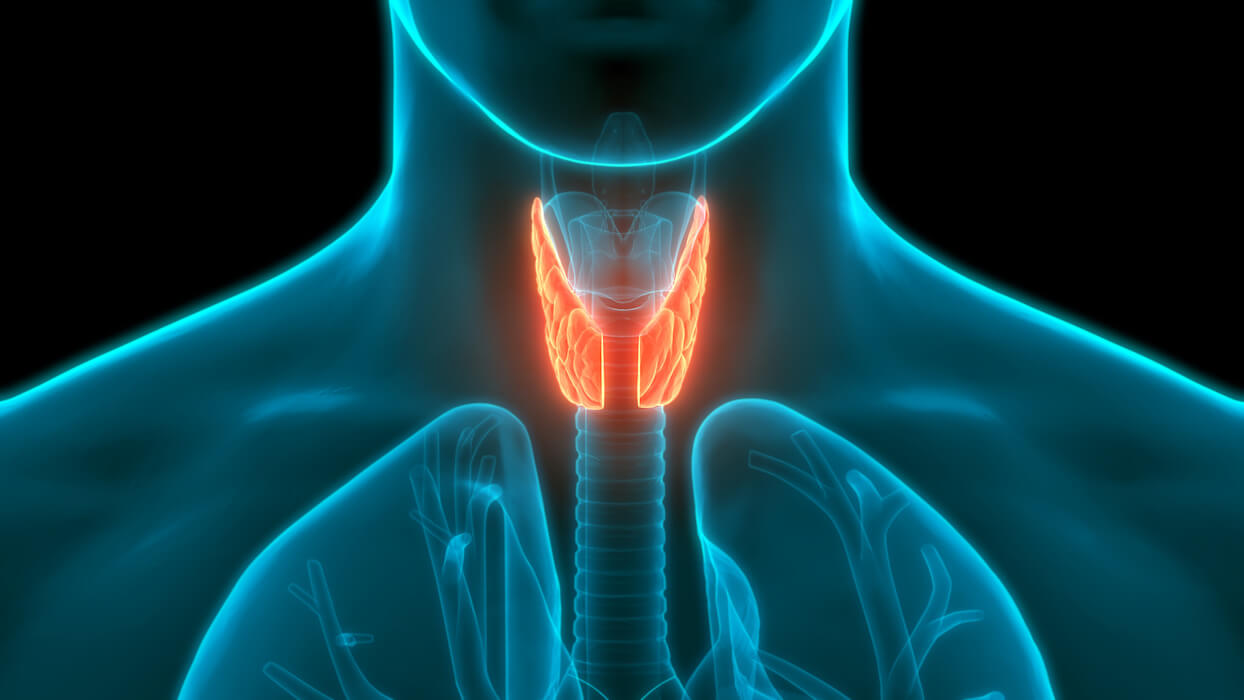
In a study conducted at the University of Twente, Technion-Israel Institute of Technology and the Open University of Israel, researchers have developed a novel approach to address the environmental challenges posed by perchlorate salts, which have been identified as persistent pollutants with potential impacts on human health. The researchers published their findings in an article titled “Selective Perchlorate Sensing Using Electrochemical Impedance Spectroscopy with Self-Assembled Monolayers of semiaza-Bambusurils,” in the journal Chemistry—A European Journal. Perchlorate salts are a type of anion—slightly negatively charged molecules—which have raised concerns due to their ability to interfere with the proper functioning of the thyroid gland, leading to…