Something Fresh in the State of Denmark
October 06, 2026






























The Technion’s story has been intertwined with Israel’s for more than a century, from laying the foundations for a new nation to shaping its future.

Step inside Israeli innovation at the David and Janet Polak Visitors Center. Experience our 360° immersive movie and tech exhibition. Open to individuals and groups.
Learn More

‘Smart cities’ are the epitome of modern-day life — teaming with technology-based infrastructure such as sophisticated surveillance cameras, timed traffic lights, and automated garbage pickup. Right? Well, what about the human equation? Between 2017 and 2021, municipal authorities recorded an unusually high rate of elderly residents who had passed away in their homes and were found only after their bodies had started decomposing. Clearly, their absence had gone unnoticed for quite some time. “Loneliness is an important issue in life: it’s a 21st century epidemic; We must not ignore it,” said Assistant Professor Meirav Aharon-Gutman, head of the Smart Social…

A computer that stores and processes data in a single chip is able to tell apart different people’s handwriting. Professor Shahar Kvatinsky, of the Technion, in Haifa, says combining its RAM and CPU allows it to function much more like a human brain, and opens up a whole new world of opportunities. To demonstrate its capabilities, he and his team presented the chip with different examples of handwritten letters. The chip learned which one was which with each example, and achieved a 97 per cent accuracy in recognition. “We like to describe a computer as a ‘brain’, but entirely separate…

Technion aerospace engineers in collaboration with U.S. software giant PTC have created a 3D-printed micro turbojet engine in one piece — not an easy feat considering the complexity of the many moving parts in a traditional jet engine. While it is not the world’s first 3D-printed jet engine, Associate Professor Beni Cukurel and Dr. Ronen Ben Horin, a senior research fellow at the Technion and a VP of Technology at PTC, can lay claim to being the first to make the printed engine in a single, complete assembly. “This microturbine engine is meant to be an iconic part that demonstrates…

Affective touch, or slow moving and low-force stimulation, has been shown to reduce feelings of stress and anxiety. But most of the time this requires another person to perform the brushing sensation, which makes the stress-reliever difficult to produce if someone is alone, at work, or in a public sphere. A new wearable device developed […]

What if computers could process information like humans do? New research conducted at the Technion shows that such a device could be a part of our not-so-distant future. Led by Professor Shahar Kvatinsky of the Andrew and Erna Viterbi Faculty of Electrical and Computer Engineering, researchers combined a computer’s random-access memory (RAM) and central processing unit (CPU) functions into one chip, which allows the device to operate more like a human brain. It could provide future opportunities for using devices to process information differently. Prof. Kvatinsky and his team tested their chip’s capabilities by showing it different examples of handwriting….
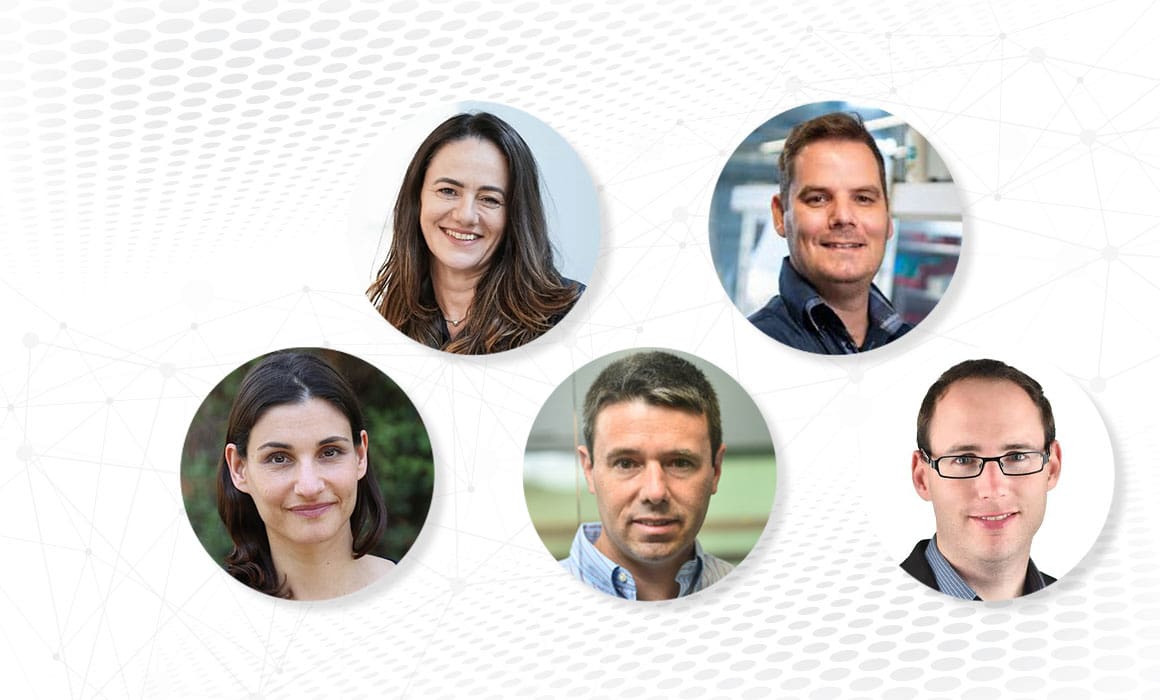
Pictured Above / (L to R) Professor Meytal Landau, Professor Asya Rolls, Professor Avi Schroeder, Assistant Professor Graham de Ruiter, and Professor Nadav Amdursky Recently, five researchers from the Technion were awarded prestigious Consolidator Grants by the European Research Council (ERC) for unique projects in their respective disciplines. The ERC Consolidator Grants provide $2.14 million to each recipient and are awarded to scientists with 7-12 years of postdoctoral research experience to fund their explorations and allow them to pursue their most promising ideas. The five Technion recipients are: Associate Professor Nadav Amdursky, a researcher in the Schulich Faculty of Chemistry…
The Technion Human Health Initiative Brings Medical Research and Technology to the Next Level It takes a village of scientists to tackle the increasingly complex health and medical issues of our time. The Technion is assembling a venture to do just that. Learn about the new Technion Human Health Initiative (THHI), a gathering of Technion […]

Pictured Above / L-R: Amir Livne, Dr. Gil Shamai and Prof. Ron Kimmel One in nine women globally will be diagnosed with breast cancer during their lifetime, and the numbers are only increasing as a result of factors, including increased lifespan and modern lifestyles. Personalized immunotherapy treatment is a necessity now more than ever, but the number of doctors and pathologists who specialize in examining tissue for specific diagnoses needed for personalized medicine is declining. To help combat this problem, Technion researchers have developed an artificial intelligence (AI) neural network that simplifies and improves the diagnostic process. Even better, the…
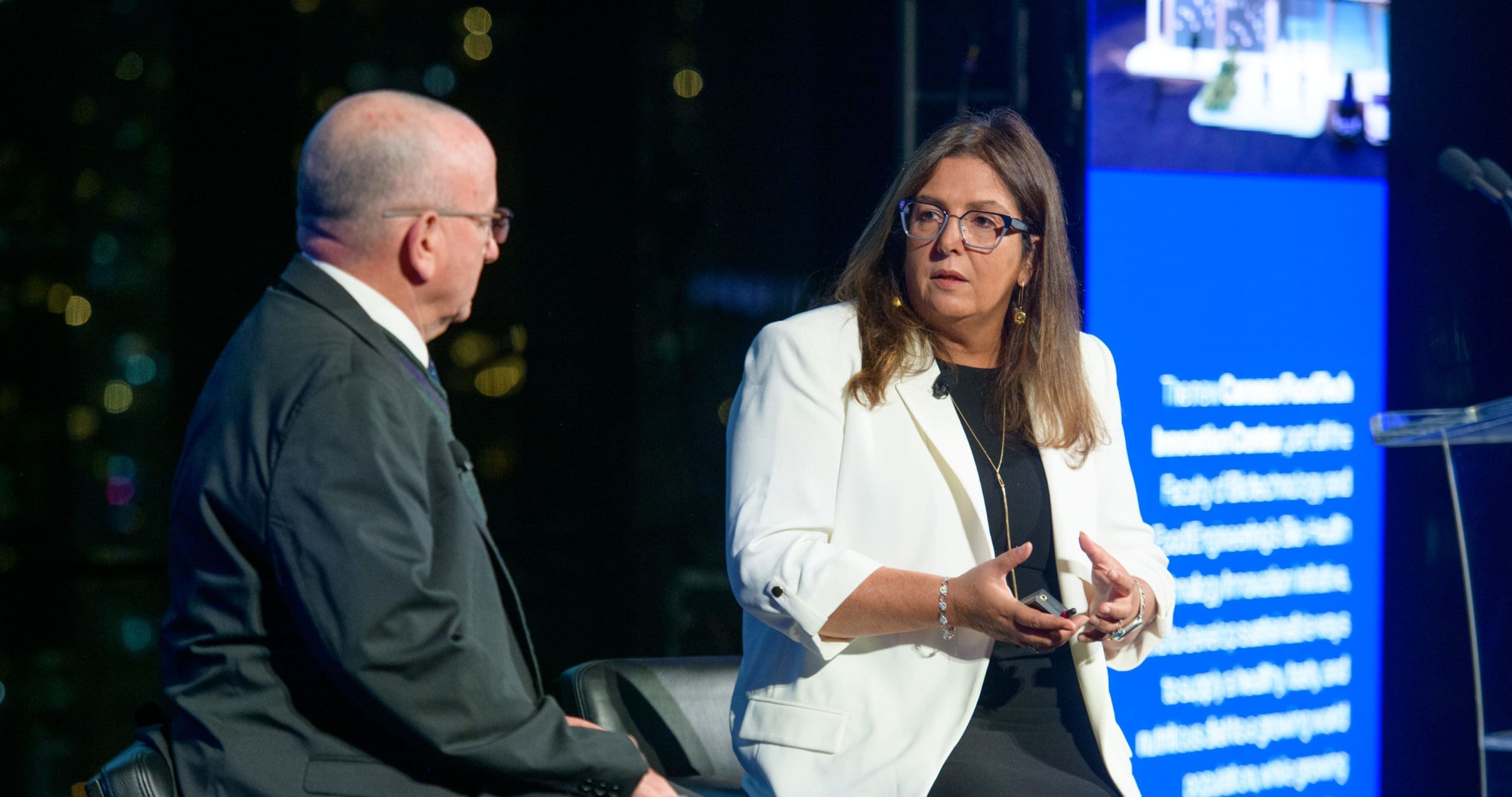
Prof. Marcelle Machluf joined ATS board members and supporters at the Fall National Board Meeting in Chicago and discussed pioneering research in the Technion’s Faculty of Biotechnology and Food Engineering, the only one in Israel, and the Carasso FoodTech Innovation Center. Researchers at the Technion are developing high-protein food alternatives such as milk produced without cows, honey without bees, and falafels made from seaweed, as well as food packaging that is biodegradable and will keep food fresher longer. In November 2022, Prof. Machluf also launched Meatafora. The foodtech startup grows meat directly from animal cells in a scalable, affordable, and…

A third of all food crops are destroyed by diseases annually, which worsens existing global food insecurity. The standard treatment with synthetic fungicides for such diseases is highly toxic, with devastating impacts on soil, crops, wildlife, and consumers. The crops become immune to the fungicides over time, ultimately leaving the plants defenseless. In hopes of solving this pressing issue, researchers at the Technion have developed an environmentally friendly, natural protective spray. Inspired by the natural properties found in the wax crystals that present on lotus and broccoli, the SafeWax anti-adhesive spray is a biodegradable formulation made of non-toxic renewable material….

Startup H2Pro, founded by Technion scientists, has signed an agreement with Morocco’s Gaia Energy to co-develop a gigawatt-scale “green” hydrogen energy project — a potential boon for promoting economic ties between the two countries and combatting climate change. “Climate change is the greatest challenge facing our generation, and it can only be solved by reaching across borders with seamless coordination between the private and public sector,” said Talmon Marco, CEO of H2Pro. The technology at the core of H2Pro was developed by Professors Avner Rothschild and Gideon Grader and Drs. Hen Dotan and Avigail Landman in the Nancy and Stephen…
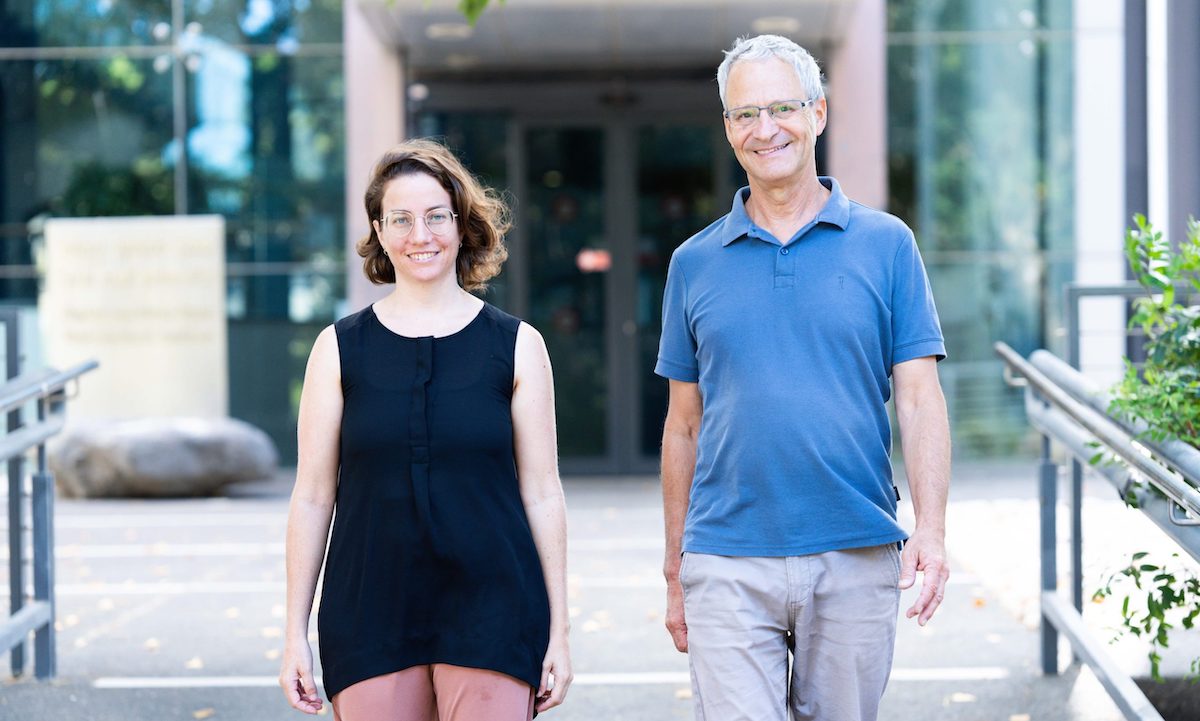
Pictured Above / Dr. Shani Rohatyn and Prof. Yohay Carmel Sounds like an easy fix to climate change: Plant trees in a billion acres of barren land. But that might not be the environmental solution we’re looking for. Studying more than 1.1 billion acres of semi-arid land worldwide, researchers from the Technion and the Weizmann Institute of Science found that contrary to conventional wisdom, turning barren lands into forests won’t cool the planet and could even worsen global warming. Why? Benefits provided by trees can be counteracted by the “albedo effect,” the ability of a surface to reflect light. Dark…