Why the Perfect Pitch is Your Biggest Mistake
September 23, 2026























The Technion’s story has been intertwined with Israel’s for more than a century, from laying the foundations for a new nation to shaping its future.

Step inside Israeli innovation at the David and Janet Polak Visitors Center. Experience our 360° immersive movie and tech exhibition. Open to individuals and groups.
Learn More

A groundbreaking wearable device is set to change how diabetes is managed through personalized, real-time care. Developed by researchers in Israel and China, the microneedle-based system offers a new level of patient support. It lets doctors and patients track disease markers and medication levels at the same time, without drawing blood. The device works in real time and is painless, providing critical health data through the skin’s interstitial fluid. Professor Hossam Haick of the Technion-Israel Institute of Technology led the research with Sun Yat-sen University colleagues. Their findings were recently published in the scientific journal Nature Communications, highlighting the system’s…

This week, two Israeli neuroscientists have rolled out a blood test in the US and Israel that they say can measure the responsiveness of a patient with major depressive disorder to common antidepressants. Depression is one of the most common forms of mental disorder, affecting more than 330 million people worldwide. Treatment methods rely primarily on a taxing trial-and-error process to find the right prescription drug, which can take years. In Israel, the psychological toll of 23 months of war and counting has made the need for effective mental health treatment felt more than ever. The blood test, created by…

Dr. Eyal Orion did not dream of being an entrepreneur, certainly not a serial entrepreneur. He knew little about economics or entrepreneurship. By the age of 30, he had not yet decided what he truly wanted to do in life. Even while on a seemingly safe path at the Technion’s medical school, doubts about whether medicine was the right choice never gave him any rest. Today, nearly two decades later, he is one of the most prominent figures in Israel’s medical device industry. He spent his childhood in Ramat Efal as one of four siblings. His parents still live in…

As global life expectancy rises, a pressing question emerges: How can we maintain health and vitality in our later years? This question is at the heart of the Technion’s latest initiative — the Healthy Aging Institute, a groundbreaking endeavor that challenges traditional boundaries in academic research. Breaking Down Barriers to Tackle Aging The Healthy Aging […]

At the Technion, researchers are unraveling the fierce battles our cells wage against viruses, uncovering how gut microbes shift the tide in chronic disease, and revealing the brain’s surprising power to heal broken hearts. From revolutionary dual-target antibodies that outsmart the flu to groundbreaking discoveries in inflammation, these breakthroughs are rewriting the future of medicine — promising lifesaving therapies that arrive faster, hit harder, and change everything.

Michael Belkin is a serial entrepreneur of a particularly rare breed. Like other serial entrepreneurs, he never stopped developing, researching, and inventing throughout his life, but he did so not out of a pursuit of money, but primarily out of the joy of creation, curiosity, and a desire to bring medicine to the world. It so happened that he made his first exit when he was already 68 years old. At an age when most of his peers were retiring, Belkin sold a company he founded for $180 million. Even then, he had no intention of retiring, but continued to…
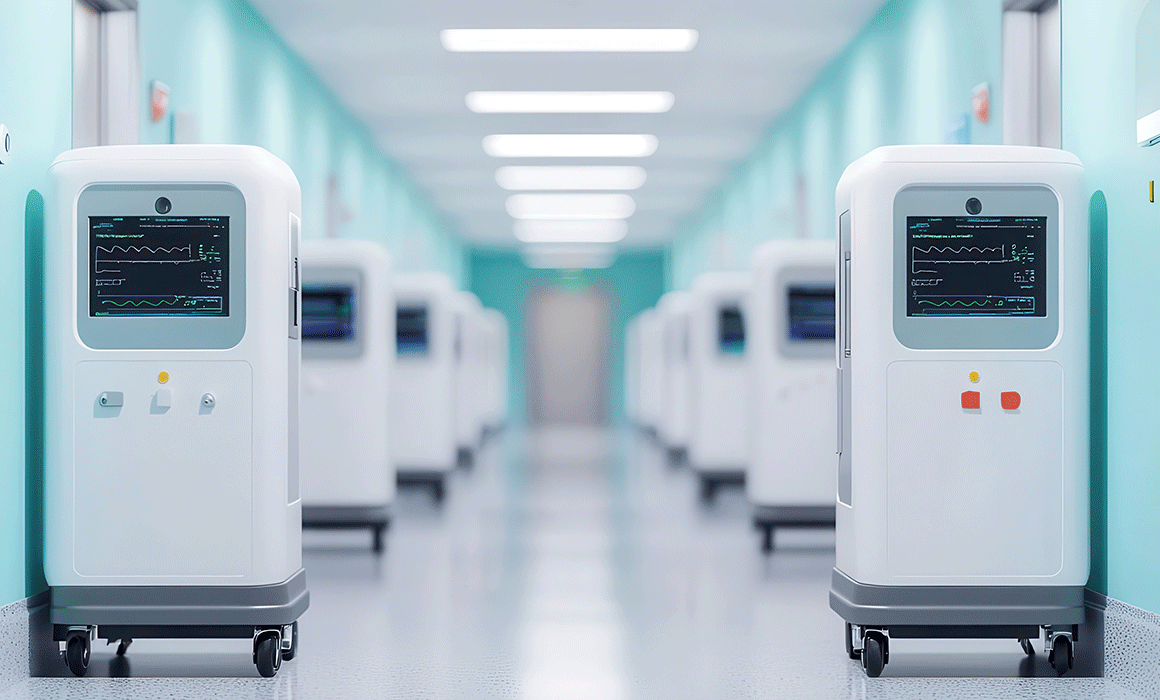
Medical crash carts — stocked with medications, syringes, gauze, and IV fluids — are essential tools in emergency rooms, where seconds matter, space is tight, and confusion can cost lives. However, despite their importance, crash carts vary widely in layout between hospitals and departments. In high-stress situations, this inconsistency can lead to delays as providers search for supplies or open the wrong drawers. That’s why a team of Cornell researchers set out to reimagine the traditional crash cart, transforming it into a robot designed to support, not disrupt, emergency care teams during critical, time-sensitive procedures. Their work, led by Angelique…

During Israel’s 2014 Operation Protective Edge, Oketz K9 unit soldier Ben Fuxbruner and his dog Kimba were wounded in combat. Kimba later died from her injuries. Alongside his physical trauma, Fuxbruner developed severe sleep disturbances—a struggle that would eventually inspire him to found a sleep technology company named after his dog. “In a single moment, I aimed my weapon at one of the buildings and placed Kimba under cover. Suddenly, I heard six shots from the right. Everything turned white, there was a loud ringing in my ears, and I was thrown to the ground. When I opened my eyes,…
As the leading cause of death in children living in developed countries, pediatric cancer is long overdue for a safer, more targeted treatment approach – and Technion Professor Alejandro Sosnik believes he may have found one. In his lab focusing on pharmaceutical nanomaterial science in the Technion’s Faculty of Materials Science and Engineering, Prof. Sosnik […]

Cancer is the leading cause of death in Israel for both men and women, and one of the leading causes of death in the Western world. In light of this tragic fact, cancer research is considered particularly active, and in recent years it is focused on targeted therapies — treatments that aim to more effectively attack cancer cells while reducing general systemic damage, as occurs with broad-spectrum chemotherapy treatments that harm other body organs. NanoGhost, an Israeli biotech company, introduces one of the most exciting and promising technologies of recent years in this field.[OB1] NanoGhost develops a highly selective first-in-class…

“We couldn’t even begin,” Prof. Horowitz-Kraus said. “There was no school. There was chaos. And when the children finally started coming in a few weeks later, I noticed right away — something had changed.” These six-year-olds were more distracted than the children she had scanned in previous studies. They struggled to focus. Something in their […]

Israeli eye surgery robotics company ForSight Robotics has raised $125 million in a Series B round led by Eclipse. The funding will be used to advance development of the company’s ORYOM platform, a robotic system designed to perform cataract surgery and treat other common eye diseases. The system aims to deliver more precise procedures, expand access to quality care, and reduce the physical burden on surgeons. ForSight’s first human clinical trials are expected to begin this year. Founded in 2020 by Prof. Moshe Shoham, Dr. Daniel Glozman, and Dr. Joseph Nathan, ForSight is currently headquartered in Yokneam Illit and will…