Something Fresh in the State of Denmark
October 06, 2026

















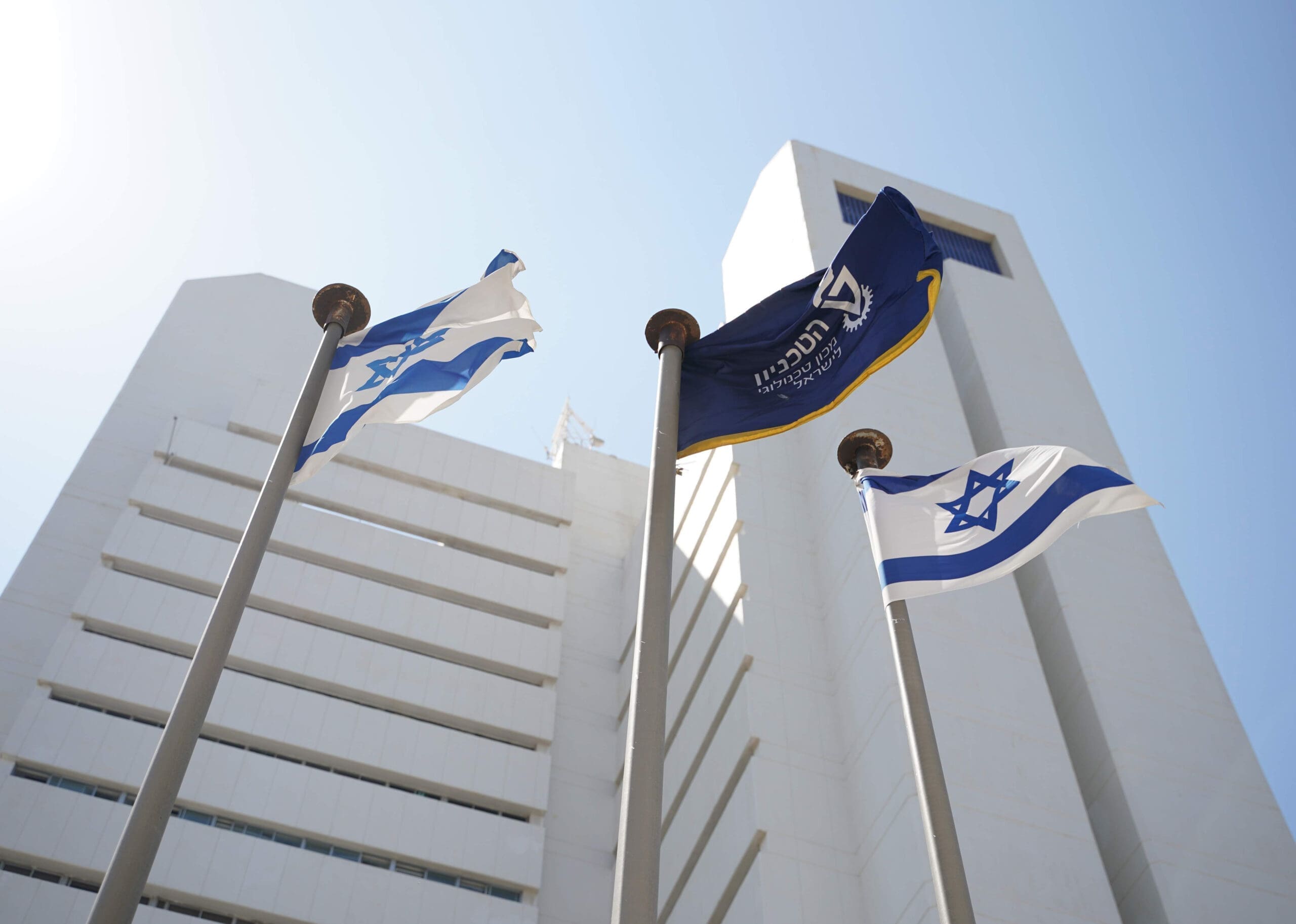





The Technion’s story has been intertwined with Israel’s for more than a century, from laying the foundations for a new nation to shaping its future.

Step inside Israeli innovation at the David and Janet Polak Visitors Center. Experience our 360° immersive movie and tech exhibition. Open to individuals and groups.
Learn More

“We couldn’t even begin,” Prof. Horowitz-Kraus said. “There was no school. There was chaos. And when the children finally started coming in a few weeks later, I noticed right away — something had changed.” These six-year-olds were more distracted than the children she had scanned in previous studies. They struggled to focus. Something in their […]

Israeli eye surgery robotics company ForSight Robotics has raised $125 million in a Series B round led by Eclipse. The funding will be used to advance development of the company’s ORYOM platform, a robotic system designed to perform cataract surgery and treat other common eye diseases. The system aims to deliver more precise procedures, expand access to quality care, and reduce the physical burden on surgeons. ForSight’s first human clinical trials are expected to begin this year. Founded in 2020 by Prof. Moshe Shoham, Dr. Daniel Glozman, and Dr. Joseph Nathan, ForSight is currently headquartered in Yokneam Illit and will…

“For millions living with Inflammatory Bowel Diseases (IBD), such as Crohn’s disease and ulcerative colitis (UC), every flare is a painful reminder of how little control they have over their lives. Flare-ups are unpredictable, debilitating, and costly,” said NimBio. The company has identified a clear challenge: a lack of time and actionable alerts for chronic inflammatory conditions. “But early detection changes everything: If we could spot inflammation earlier, we could reduce flare-related hospitalizations by up to 50%, saving an estimated $5 billion annually, even with conservative assumptions,” the company added. NimBio has developed a non-invasive Inflammometer™ technology that can be…

“Lung cancer and liver cancer are in the top three deadliest cancers in the world, simply because we catch it way too late,” said Ilay Marom, the co-founder and Chief Operating Officer at NaNose Medical. Founded around five and a half years ago, NaNose Medical is working to change that reality. Launched “with the purpose of revolutionizing screening tests and early diagnosis,” Marom explained in conversation with CTech, the Israeli startup is pioneering non-invasive diagnostics based on breath biomarkers. It’s technology that holds particular significance for the early detection and future treatment of liver disease and lung cancer. “Everybody knows…

On Wednesday, May 21, 2025, a delegation from the Zimin Foundation visited the Technion, led by Foundation President Boris Zimin and including Augie Fabela, co-founder and business partner of late Dr. Dmitry Zimin, and Dr. Mark Shmulevich, Director of the Zimin Institutes. During the visit, which marked a key milestone in AI-powered medical innovation at the Technion, Mr. Zimin unveiled a new plaque at the Zimin Institute for AI Solutions in Healthcare, which honors Dr. Dmitry Zimin and Mr. Boris Zimin and the inspiring legacy of the Zimin family. The delegation met with Technion President Prof. Uri Sivan, who thanked…

Everybody needs a buddy – especially Navy divers. Working underwater is physically taxing, visibility is low, and divers can easily become exhausted or suffer from insufficient oxygen or nitrogen narcosis, resulting in cognitive impairment. The problem with relying on a partner who can come to your rescue, however, is that they are vulnerable to the same conditions. That’s why Cornell researchers are working to understand how robots can assist humans in dangerous and physically challenging environments. “We have these tools with amazing capacity, but for them to work with people, they need to be able to understand people,” said Andrea…

What does it take to achieve a slender physique? In years past, individuals seeking to lose weight needed to spend hours sweating at the gym or subject themselves to chalky meal replacement shakes. Today, there is an easier way, found through a doctor’s prescription pad. A Technion alumnus has developed a medical solution that rivals […]

The electrocardiogram (ECG) is one of the most essential tools in modern medicine, used to detect heart problems ranging from arrhythmias to structural abnormalities. In the U.S. alone, millions of ECGs are performed each year, whether in emergency rooms or routine doctor visits. As artificial intelligence (AI) systems become more advanced, they are increasingly being used to analyze ECGs—sometimes even detecting conditions that doctors might miss. The problem with this is that doctors need to understand why an AI system is making a certain diagnosis. While AI-powered ECG analysis can achieve high accuracy, it often works like a “black box,”…

A young man was brought to the emergency room of Hadassah University Medical Center in Jerusalem in traumatic cardiac arrest after shrapnel tore his inferior vena cava, the big vein in the middle of the belly. The young trauma surgeon opened the young man’s chest to start internal cardiac massage. At the same time, he instructed his team to use HemaShock, which they’d learned about when treating soldiers during army reserve duty. Applied in emergency cases of dangerously low systolic blood pressure caused by hemorrhagic shock or cardiac arrest, this unique exsanguination tourniquet squeezes all the blood from the patient’s…

Entrepreneur Ifat Shterenberg Toledano was 30 weeks into her fourth pregnancy when she started feeling sudden excruciating pain in her pelvis and lower back. “Basically, I became disabled,” she tells ISRAEL21c. Her horrifying medical ordeal resulted in Shterenberg Toledano establishing Treat Me, a unique platform combining Western medicine, complementary therapies and cutting-edge research. Designed for practitioners, the platform leverages research-driven data and AI to personalize each treatment, improve patient outcomes and streamline care. It incorporates all integrative care methods, from more traditional treatments such as physiotherapy, to holistic ones such as Chinese medicine, naturopathy, reflexology and more.
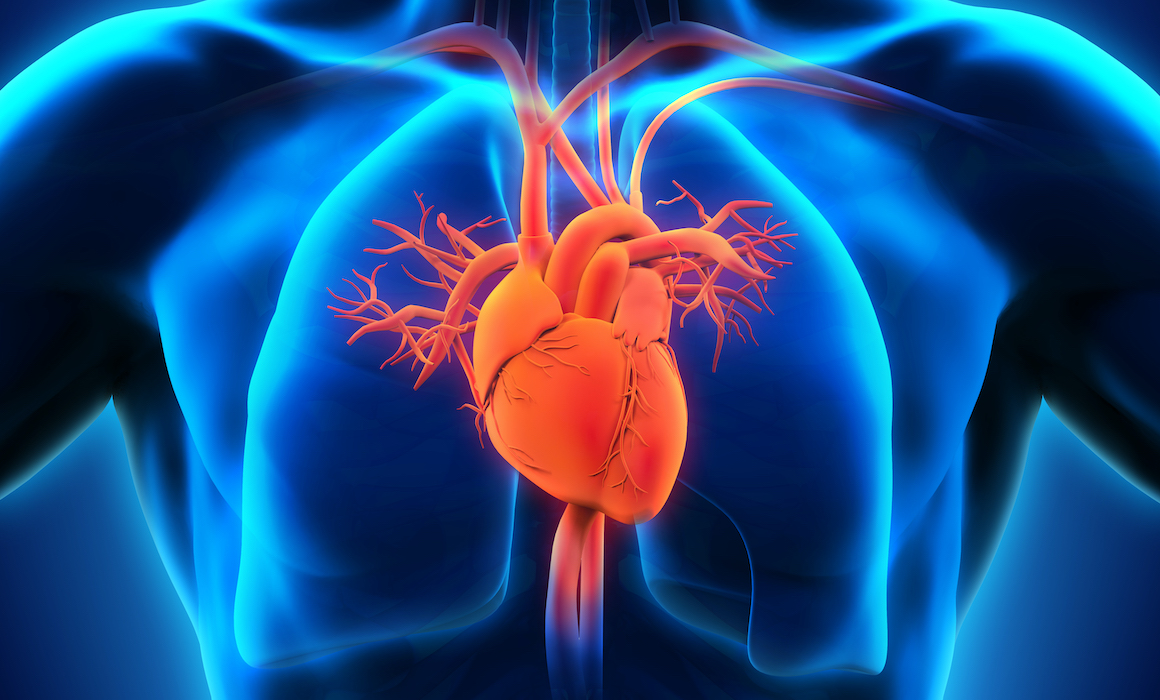
AISAP, an Israeli medical startup pioneering AI-driven diagnostics, has been recognized as one of the world’s most innovative and promising companies for 2025 by Fast Company. The company secured fourth place globally in the healthcare category, a remarkable achievement that underscores the international recognition of its groundbreaking technology and its impact on the future of medicine. AISAP was founded by Adiel Am-Shalom, a former officer in Israel’s elite 8200 intelligence unit, alongside leading medical professionals: Professor Ehud Raanani, Professor Robert Klempner, and Professor Ehud Schwammenthal. The company has raised approximately $13 million in funding from investors including Harel Insurance, Shoni…

Technion scientist Assaf Zinger began wondering about breast milk when his wife, Noa, was breastfeeding their newborn daughter, Tamara, five years ago. His wife had just received the COVID vaccine, and Tamara was starting to develop symptoms of the vaccine. “I thought, ‘Hey, wait a minute, nanoparticles should degrade in the stomach,” Zinger told The Times of Israel in a teleconference call. “They should not be absorbed in the small intestine.” After two years of research, Zinger said he believes that his team of 16 scientists is the first in the world to show that breast milk proteins can be…